The first scramjet, an airbreathing jet engine capable of pushing an aircraft beyond Mach 5, was successfully flown in the early 1990s. But while pretty much any other technology you could imagine has progressed by leaps and bounds in the nearly 30 years that have passed, the state-of-the-art in hypersonic scramjets hasn’t moved much. We still don’t have practical hypersonic aircraft, military or otherwise, and any missiles that travel at those sort of speeds are rocket powered.
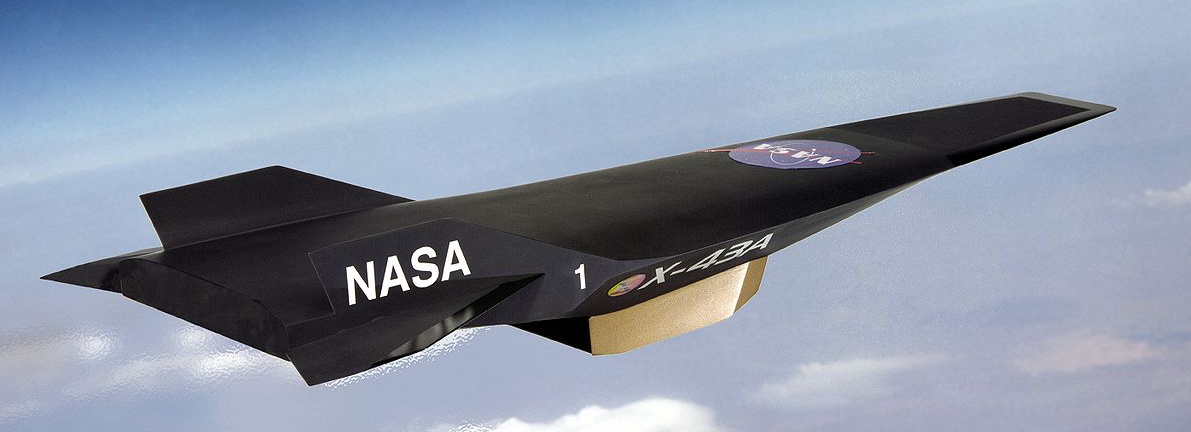
This is somewhat surprising since, at least on paper, the operating principle of the scramjet is simplicity itself. Air rushing into the engine is compressed by the geometry of the inlet, fuel is added, the mixture is ignited, and the resulting flow of expanded gases leaves the engine faster than it entered. There aren’t even any moving parts inside of a scramjet, it’s little more than a carefully shaped tube with fuel injectors and ignitors in it.
Unfortunately, pulling it off in practice is quite a bit harder. Part of the problem is that a scramjet doesn’t actually start working until the air entering the engine’s inlet is moving at around Mach 4, which makes testing them difficult and expensive. It’s possible to do it in a specially designed wind tunnel, but practically speaking, it ends up being easier to mount the engine to the front of a conventional rocket and get it up to speed that way. The downside is that such flights are one-way tickets, and end with the test article crashing into the ocean once it runs out of fuel.
But the bigger problem is that the core concept is deceptively simple. It’s easy to say you’ll just squirt some jet fuel into the stream of compressed air and light it up, but when that air is moving at thousands of miles per hour, keeping it burning is no small feat. Because of this, the operation of a scramjet has often been likened to trying to light a match in a hurricane; the challenge isn’t in the task, but in the environment you’re trying to perform it in.
Now, both Aerojet Rocketdyne and Northrop Grumman think they may have found the solution: additive manufacturing. By 3D printing their scramjet engines, they can not only iterate through design revisions faster, but produce them far cheaper than they’ve been able to in the past. Even more importantly, it enables complex internal engine geometries that would have been more difficult to produce via traditional manufacturing.
More Time to Burn
The term scramjet is short for “supersonic combustion ramjet”, which actually gives us a pretty good clue as to what’s going on inside of one. While scramjets work at hypersonic speeds beyond Mach 5, a ramjet operates from just below the speed of sound to about Mach 3. They function on essentially the same principle, but with one very important distinction: the air inside the ramjet is slowed down to subsonic velocity during the combustion stage, while in a scramjet it travels through the engine at supersonic speeds.
Not slowing the airflow inside the engine is key to the higher operational velocity of the scramjet, but it’s also the element that makes sustained combustion so difficult. Imagine a hypothetical scramjet engine with a combustion chamber that’s one meter long; at a velocity of Mach 5, air traveling in a straight line will only be inside the chamber for a fraction of a millisecond. That doesn’t give it a lot of time to mix with the fuel and ignite.
The best option for increasing the amount of time the engine has to burn the fuel and air mix, referred to as the “residence time”, is to complicate its internal geometry. Dotting the inside of the combustion chamber with small flameholder cavities gives the gasses somewhere to linger, and research has shown this greatly improves overall engine stability at hypersonic speeds.
There are a few competing ideas in regards to the shape of these cavities, but the most common approach uses indentations with a 90° leading edge and sloped back wall. According to the research paper Cavity Flame-Holders for Ignition and Flame Stabilization in Scramjets, when these indents are located aft of the fuel injection ports, the sudden drop at the front of the step creates a void in which gasses will recirculate. The angled back wall helps prevent the shockwaves which would otherwise be generated if the flow struck a flat surface after dipping down into the cavity.
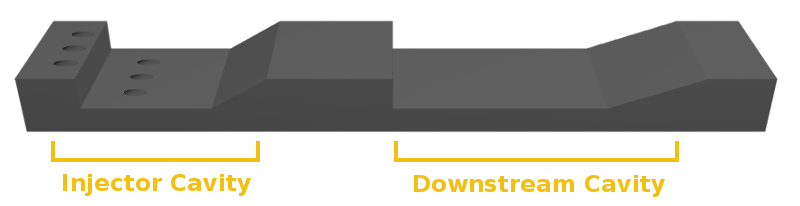
In a traditionally manufactured scramjet, these indentations would be milled into the walls of the combustion chamber. But with additive manufacturing, they can be integrated at the time of manufacture. Not only will this save time and money during the production of the engine, but it also allows for the size and position of the cavities to be experimentally adjusted. Research so far indicates that the more cavities the better, and that a “wavy” surface on the inside of the combustion chamber may be ideal.
Faster and Smaller
For the production of only a few scramjet engines, say for a small fleet of hypersonic reconnaissance aircraft, then the cost and time savings of additive manufacturing probably wouldn’t be that big of a deal. When it comes to developing cutting-edge military aircraft, history tells us the United States government is more than willing to spend whatever money is required to maintain technological superiority. But at least in the near term, the most likely application for hypersonic scramjet engines isn’t a plane.
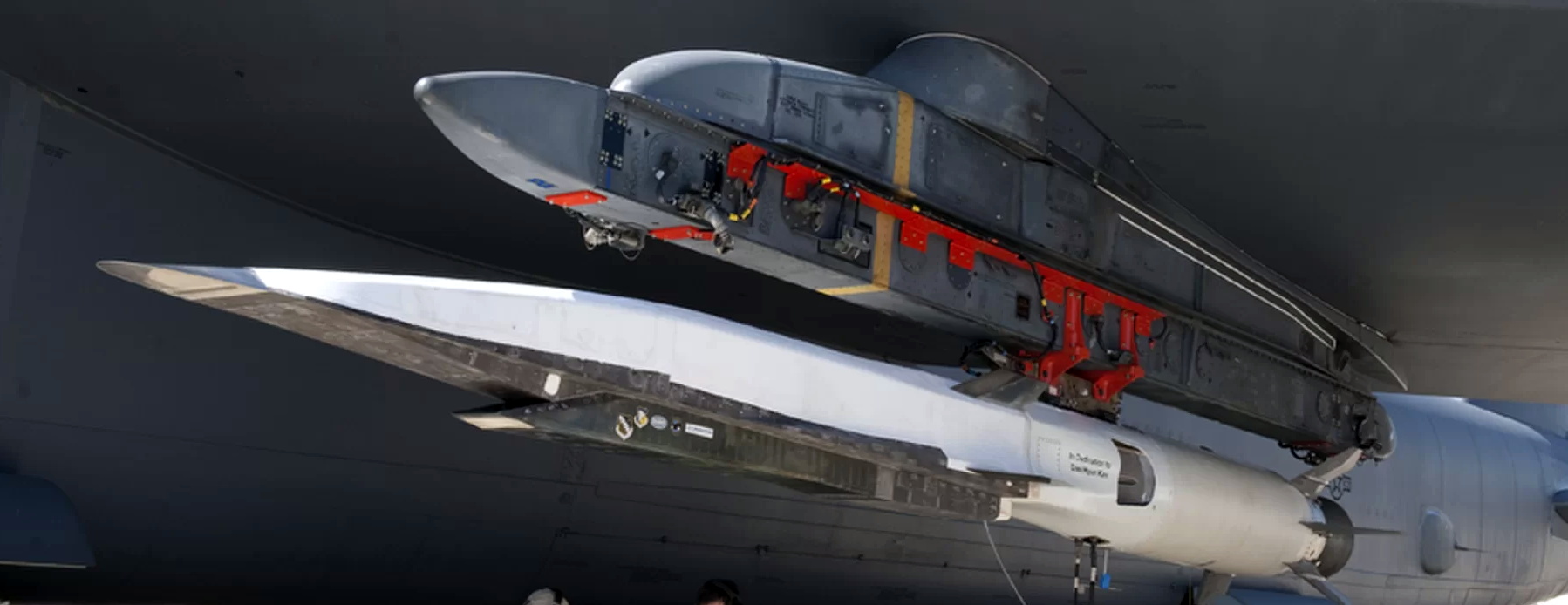
Aerojet Rocketdyne and Northrop Grumman have partnered with Lockheed Martin and Raytheon respectively to develop entries for the Defense Advanced Research Projects Agency’s (DARPA) Hypersonic Air-breathing Weapon Concept (HAWC) program, which aims to develop an affordable air-launched hypersonic missile. The program is the logical progression of the research performed during the development of the Boeing X-51 Waverider, which in 2013 set the record for the world’s longest flight of a hypersonic scramjet.
While the Waverider was successful, it was built as a technical demonstrator and never designed to be operational weapon. DARPA and the US Air Force now want to take the knowledge gained during the X-51 program and apply it to a mass-produced missile. With that shift naturally comes the need to build the engines as quickly and as cheaply as possible. There’s also a desire to miniaturize the weapon; the Waverider had to be carried aloft by a B-52 bomber, but a hypersonic cruise missile small enough to be carried by a fighter jet would be faster and less costly to deploy.
To achieve that goal, both teams have announced they are utilizing 3D printed scramjet engines. According to Aviation Week, the scramjet engine developed by the Raytheon and Northrop Grumman team is less than half the mass of the one that was used in the Boeing X-51 Waverider.
Getting Up to Speed
As you might expect with an ongoing weapons development competition, there’s a lot we don’t know about the HAWC program and its competitors. But we do know that the 3D printed engines built by Aerojet Rocketdyne and Northrop Grumman are both very far along in their development. While the exact timetable of these tests are naturally classified, DARPA Director Steven Walker told reporters in May that flight testing of at least one of the HAWC entries would happen before the close of the calendar year.
With Russia and China developing arsenals of hypersonic weapons, the United States military is highly motivated to bring their own Mach 5+ missiles and aircraft up to operational status. Some analysts believe this may be a relatively rare instance where the US is lagging behind in weapons technology, but with programs like HAWC and innovative approaches to decade’s old problems, the race may be heating up soon.