Earlier this month, a group of biohackers installed two Rasberry Pis in their legs. While that sounds like the bleeding edge, those computers were already v2 of a project called PegLeg. I was fortunate enough to see both versions in the flesh, so to speak. The first version was scarily large — a mainboard donated by a wifi router roughly the size of an Altoids tin. It’s a reminder that the line between technology’s cutting edge and bleeding edge is moving ever onward and this one was firmly on the bleeding edge.
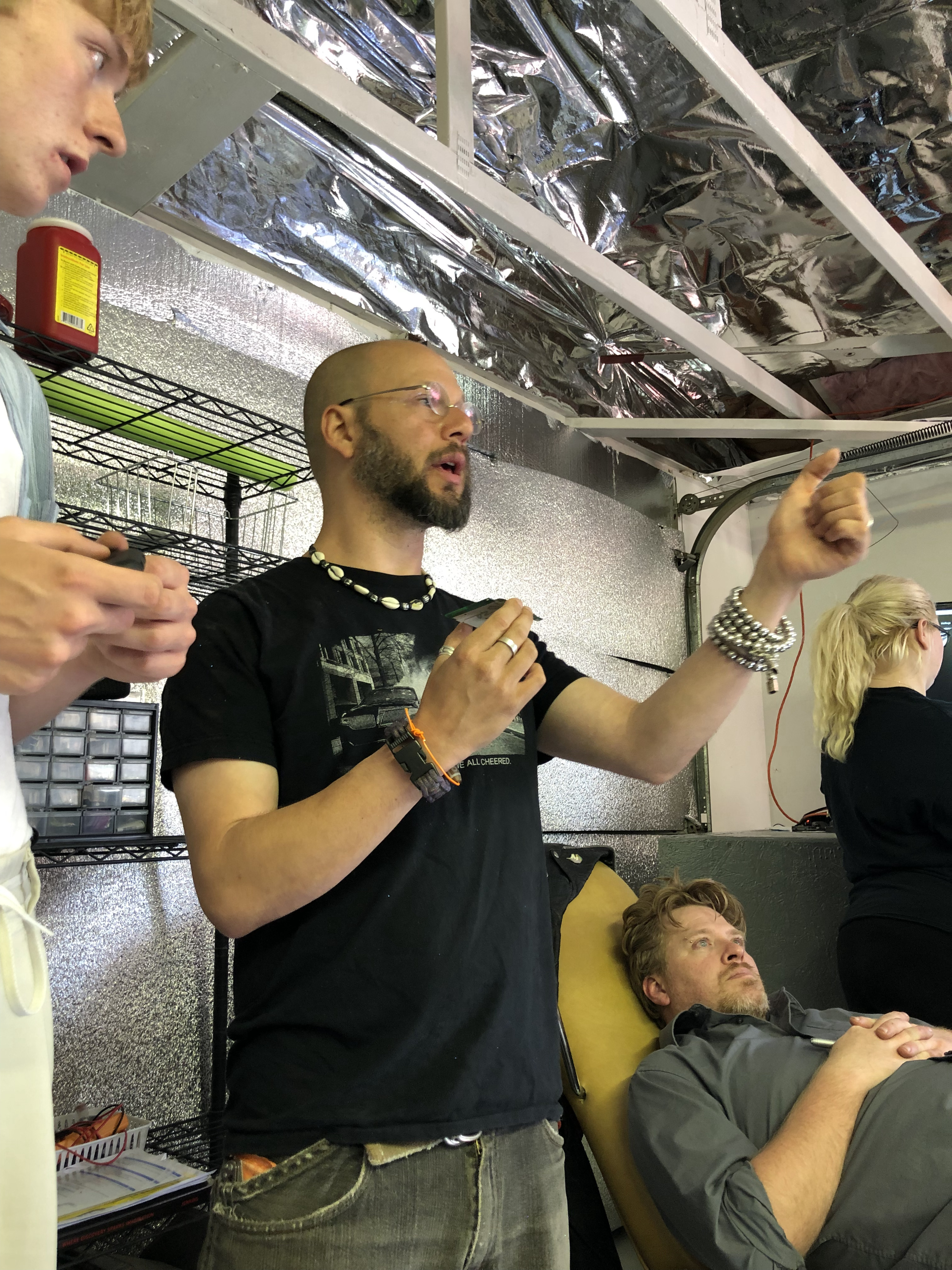 How does that line end up moving? Sometimes it’s just a matter of what intelligent people can accomplish in a long week. Back in May, during a three-day biohacker convention called Grindfest, someone said something along the lines of, “Wouldn’t it be cool if…” Anyone who has spent an hour in a maker space or hacker convention knows how those conversations go. Rather than ending with a laugh, things progressed at a fever pitch.
The router shed all non-vital components. USB ports: ground off. Plastic case: recycled. Battery: repurposed. Amazon’s fastest delivery brought a Qi wireless coil to power the implant from outside the body and the smallest USB stick with 64 GB on the silicon. The only recipient of PegLeg version 1.0 was [Lepht Anonym], who uses the pronoun ‘it’. [Lepht] has a well-earned reputation among biohackers who focus on technological implants who often use the term “grinder,” not to be confused with the dating app or power tool.
V1: Implanting a Router Board
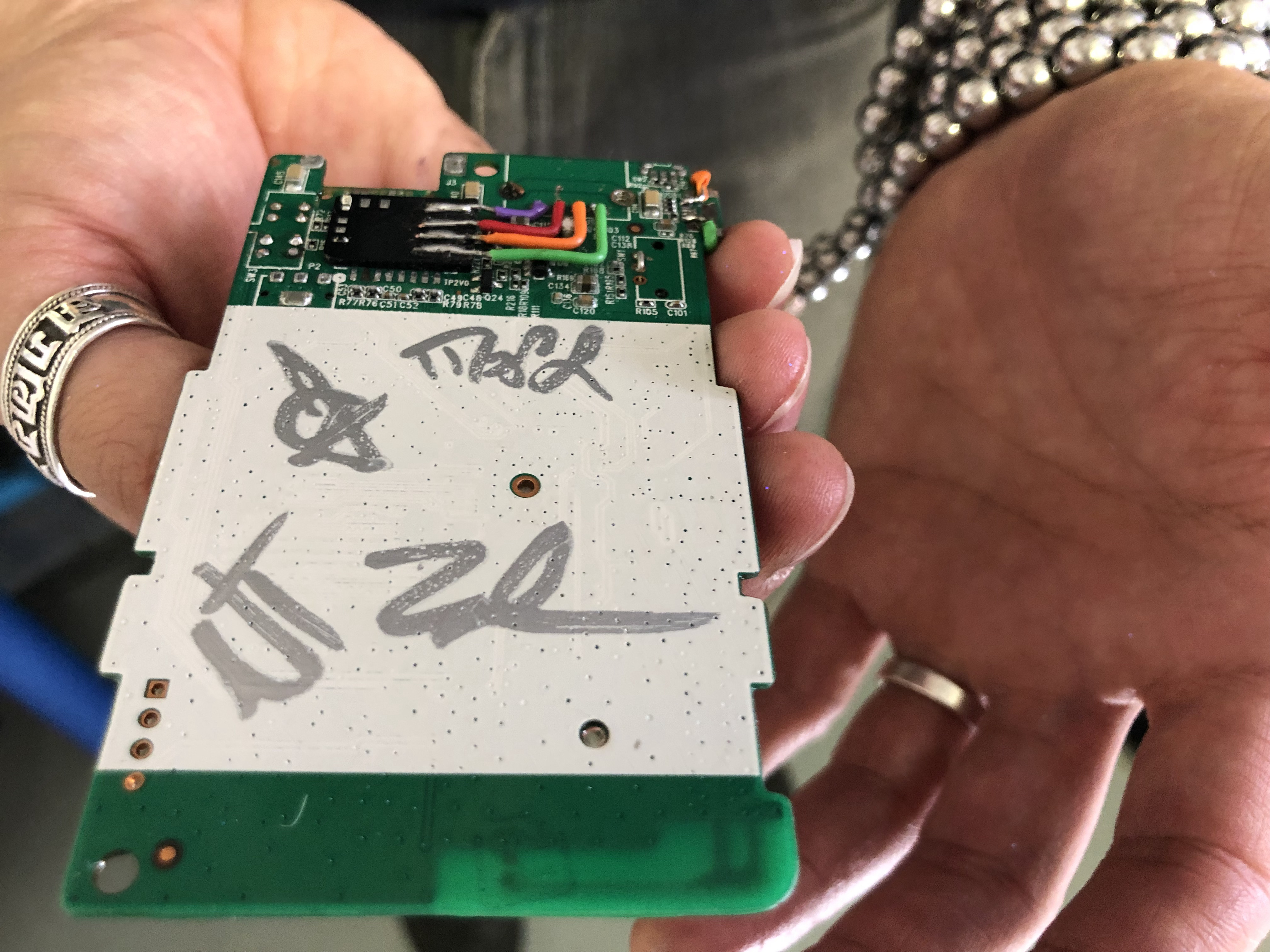
[Mixæl Laufer], [Nick Titus], and [Zac Shannon] were the hands-on folks who performed the delicate deconstruction so nothing would prevent the coating from adhering. Anything that goes inside the body must be protected, or there will be trouble. [Cass] developed a biocompatible resin for just such an occasion, and the formula underwent rigorous testing before Pegleg was even a thought. [Cass] is a nurse in California who hosts Grindfest at his home where he has a lab and surgery room that would turn some hackerspaces green with envy.
[Nick Titus] was in charge of optimizing the hardware and minimizing the failure points. Goodness knows when we build something and it stops working, we check our own work first and having one person labor over every solder joint, and stress point. This due diligence (and beyond) is wise for an implant.
Every time I did another mod on the hardware, I’d try and test it again, and the stakes would go up.
—[Mixæl]
I took some pictures while [Mixæl] cradled the uncoated v1 in both hands like it was a baby bird. I knew this was a bit of future-history, and the gravity of it will stay with me forever. The members even signed the silkscreen at the insistence of [Lepht] who reported zero problems with the implant after ten weeks. The actual implantation happened after the official end of Grindfest, but the procedure did make [Lepht] miss its flight, and the airlines were unkind to someone fresh out of surgery.
Raspberry Pi Zero’s Turn to Go Under the Skin
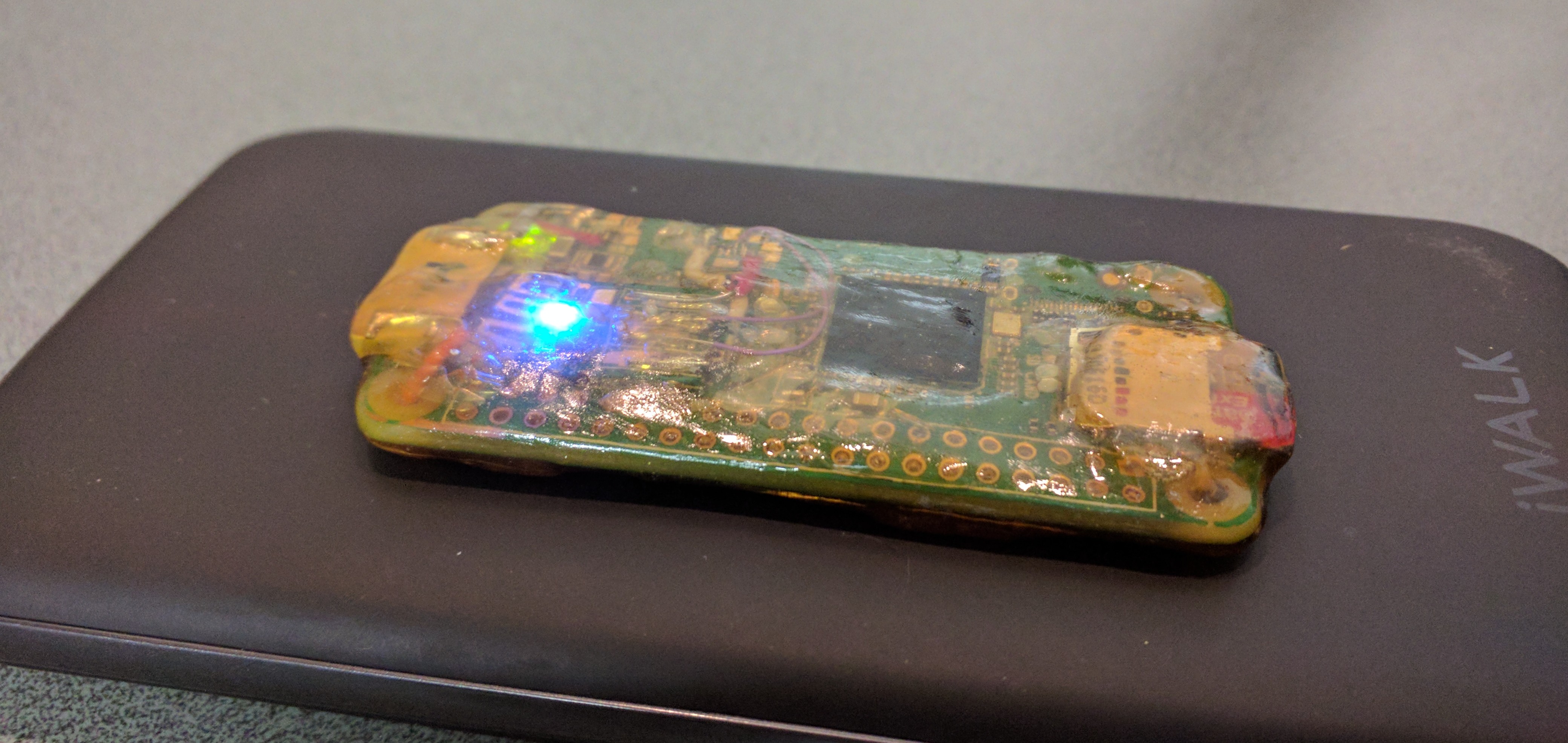
But hey, who’s still using router PCBs these days? The board-du-jour is the diminutive Raspberry Pi Zero. At DEF CON 27, I got to see and hold Pegleg v2 which shrank to a Pi0W (Raspberry Pi Zero W) with a Qi receiver, capacitor, wifi dongle, and half of a terabyte for storage. Three of them were made for implantation during the conference.
[Lepht]’s model went into its arm, near a rook tattoo, but the last two went into the upper thigh of [Mixæl] and [Cass] who planned the site based on where a Qi battery pack would sit in the pocket of their favorite pants. [Cass] implanted both devices, so if you think you’re metal, ask yourself if you could install a computer in your own thigh.
Decentralized Filesharing and Other Tricks of These Implants
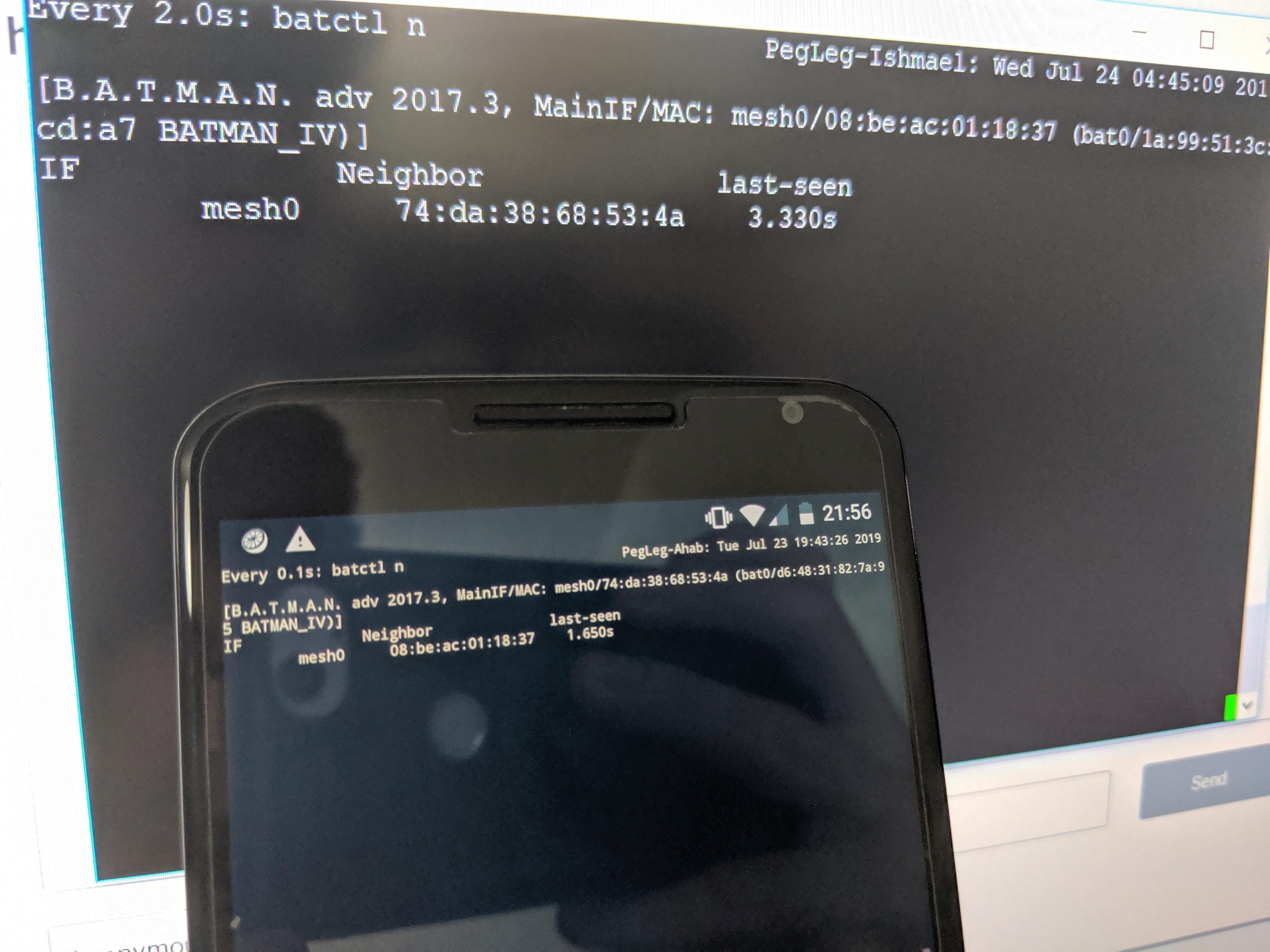
Each Pegleg runs a distro of PirateBox so while it is powered, any end-users with a WiFi device can connect to find an anonymous chat room, file server, and a video of the installation surgery if the owner kept it. PirateBox is under threat of vanishing without support, so if that is your jam, hit them up. The self-contained server does not require Internet access but relies on mesh networking to connect users. Implanted memory and networking seems like science fiction and speaking of sci-fi, these biohacks grabbed the attention of [William Gibson] who has an idea or two about humans carrying encrypted data. Johnny Mnemonic anyone?
If we have a mesh network, it could eventually replace the centralized Internet, and have all the things that we thought the Internet would have but now lacks because of centralization. It can be easily shut down, censored, surveilled…and it costs to access.
—[Mixæl]
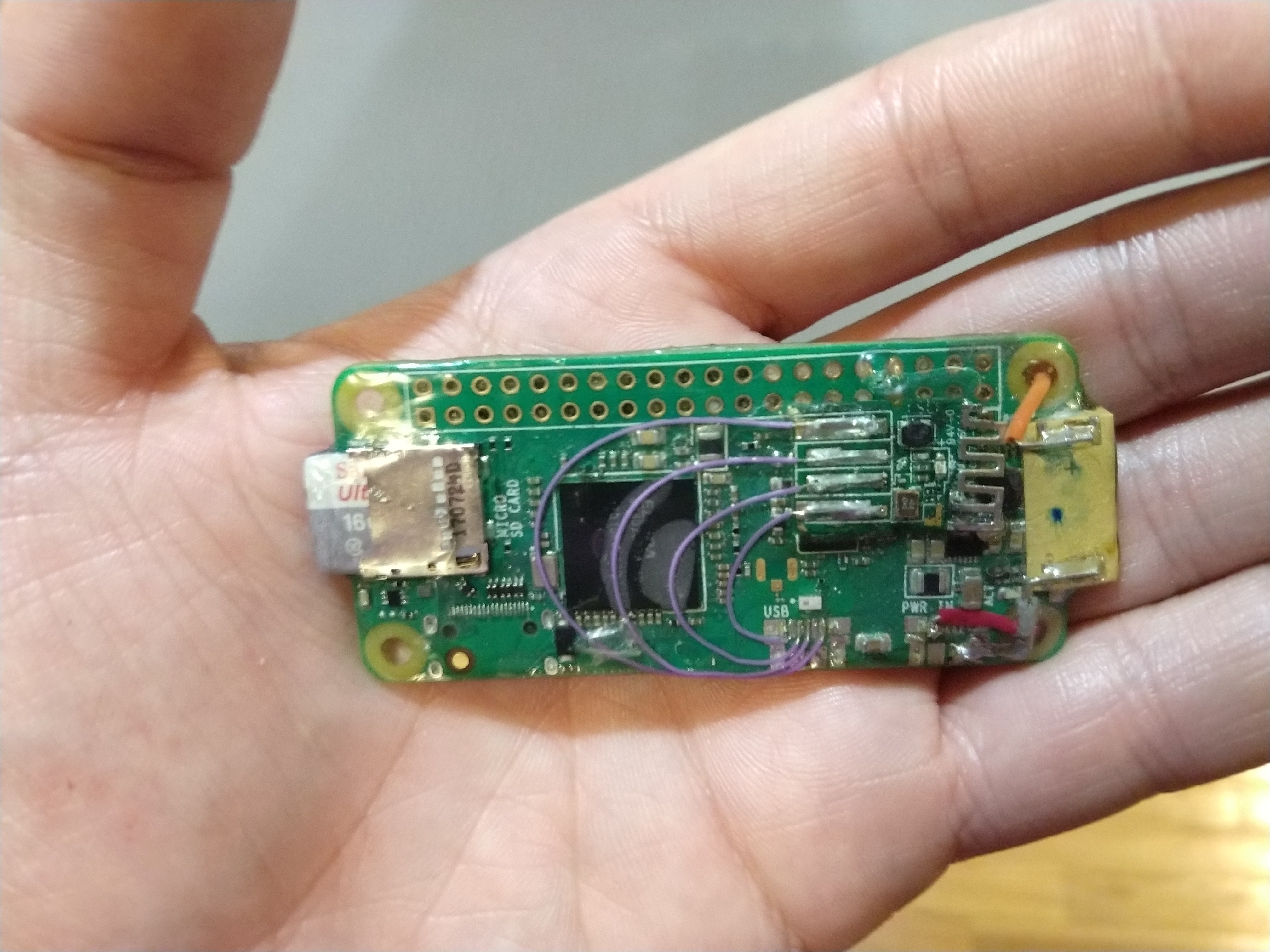
Hardware was not the only thing to change from v1 to v2. The software was modified by [Zac] who made the Pegleg distro and got mesh networking running. The best description for his work is “software research, configuration, and testing,” but techno-wizardry would also suffice.
Multiple units went through the tool shop under [Nick]’s hands, who also organized logistics which he would fondly call “Wet angry cat herding.” Seriously, try getting a bunch of hackers to all do the same thing on a regular basis. Hardware optimization was still at the front of his plate and off the top of his head, [Nick] was able to tell me the number of solder joints (fourteen) in the second version and if you don’t need mesh networking, you can get by with just six.
Where We Are Now With Computing Impants
I spoke with [Nick] about the whole process. He feels that implanting a PegLeg is a form of expression more than a logistical necessity. He also recommended that anyone interested in making an implant at home should try to avoid batteries and he detailed the complexities of containing a rechargeable battery with their heat problems, expansion, and compression foam, before stopping himself from proselytizing. Understanding the entire system that makes up the implant is vital. For instance, he spotted some missing admin functions that would have allowed anonymous users to upload files at will, but they could not be deleted.
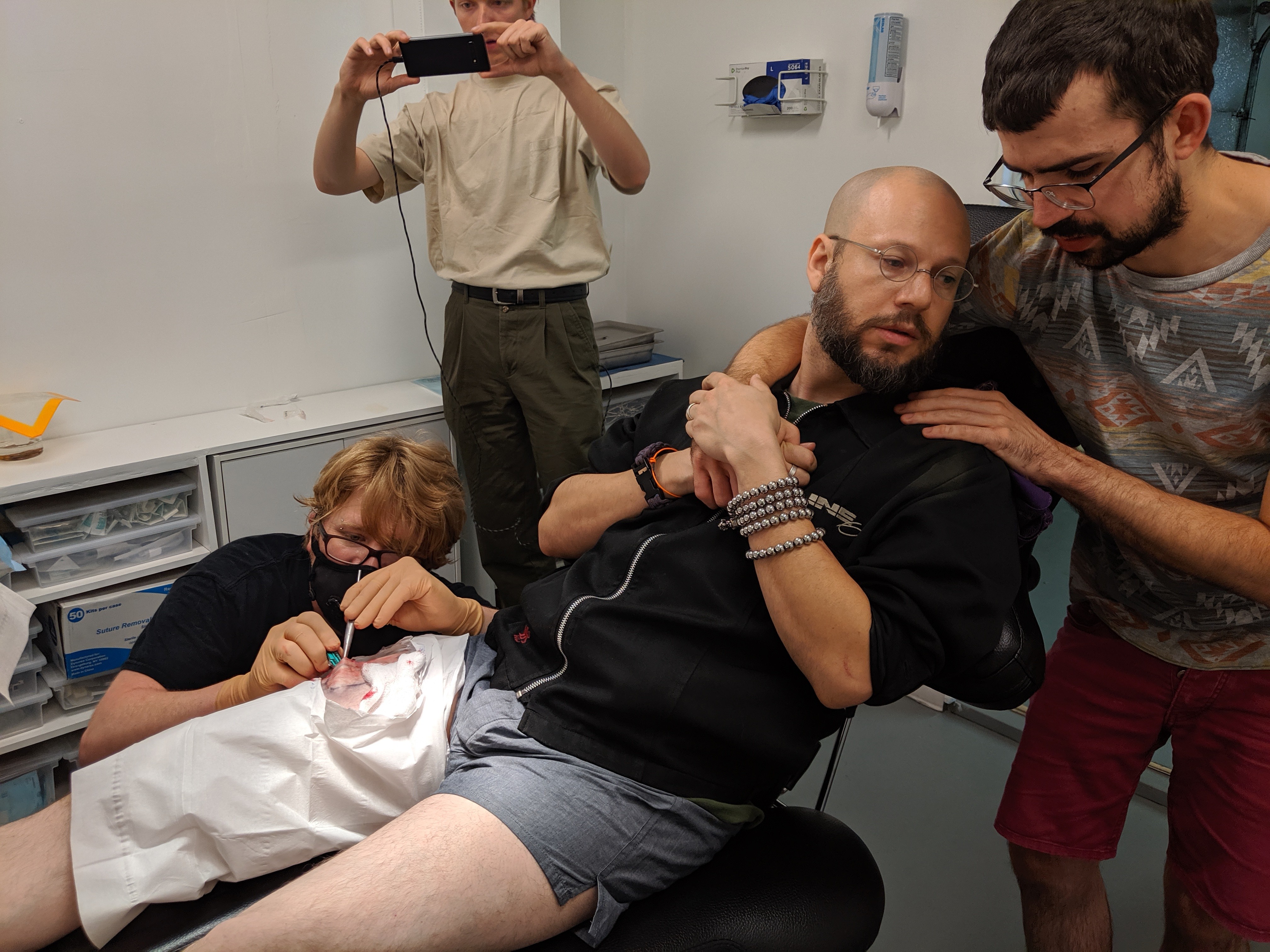
There are plans for a third version, and the goal is to make it the same area as a postage stamp but thicker. Research into wireless charging through metallic skin decals and other hardware platforms is in their future. There are no plans for a Kickstarter or any monetization, but you can freely find the exact recipe at their site. If you believe PegLeg is the coolest thing ever, they accept donations, and if you think PirateBox deserves some love, they need developers if they are going to stay afloat.
On the lighter side, when you say, “No more pie for me, it goes right to my hips,” you can think of the folks who let the Pi go right to their thighs.
Thank you, [cyberlass] and [SmokeLegend] for the tip.