When I got the call asking if I’d be willing to fly down to Kennedy Space Center and cover an event, I agreed immediately. Then about a week later, I remembered to call back and ask what I was supposed to be doing. Not that it mattered, I’d gladly write a few thousand words about the National Crocheting Championships if they started holding them at KSC. I hadn’t been there in years, since before the Space Shuttle program had ended, and I was eager to see the exhibit created for the fourth member of the Shuttle fleet, Atlantis.
So you can imagine my reaction when I learned that the event Hackaday wanted me to cover, the Cornell Cup Finals, would culminate in a private viewing of the Atlantis exhibit after normal park hours. After which, the winners of the competition would be announced during a dinner held under the orbiter itself. It promised to be a memorable evening for the students, a well deserved reward for the incredible work they put in during the competition.
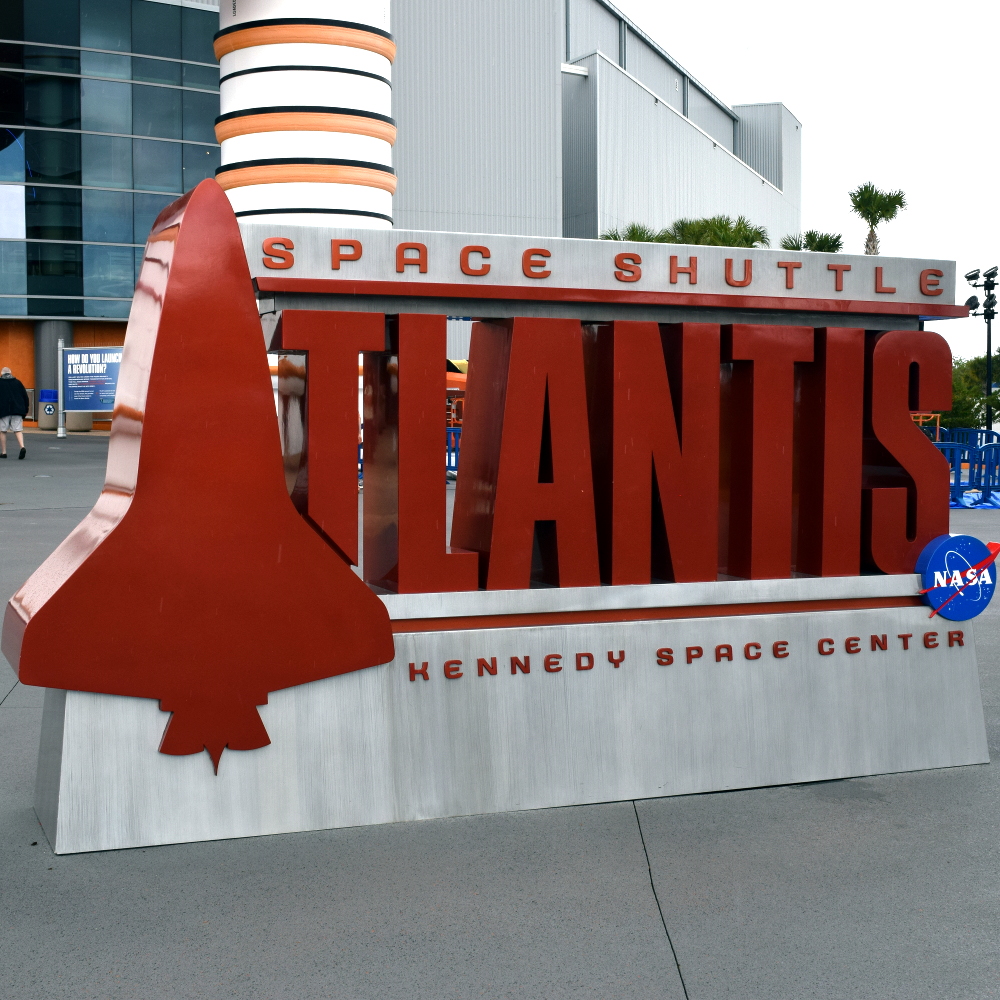 Thinking back on it now, the organizers of the Cornell Cup and the staff at Kennedy Space Center should truly be commended. It was an incredible night, and everyone I spoke to felt humbled by the unique experience. There was a real, palpable, energy about it that you simply can’t manufacture. Of course, nobody sitting under Atlantis that night was more excited than the students. Though I may have come in as a close second.
I’ll admit it was somewhat bittersweet to see such an incredible piece of engineering turned into a museum piece; it looked as if Atlantis could blast off for another mission at any moment. But there’s no denying that the exhibit does a fantastic job of celebrating the history and accomplishments of the Space Shuttle program. NASA officially considers the surviving Shuttle orbiters to be on a “Mission of Inspiration”, so rather than being mothballed in a hangar somewhere in the desert, they are out on display where the public can get up close and personal with one of humanities greatest achievements. Judging by the response I saw, the mission is going quite well indeed.
If you have the means to do so, you should absolutely make the trip to Cape Canaveral to see Atlantis and all the other fascinating pieces of space history housed at KSC. There’s absolutely no substitute for seeing the real thing, but if you can’t quite make the trip to Florida, hopefully this account courtesy of your humble scribe will serve to give you a taste of what the exhibit has to offer.
An Emotional Introduction
Before you get to see Atlantis herself, you’re directed into a long hallway that spirals in towards the center of the building. There’s gorgeous images from the history of the Shuttle program and inspirational quotes about what it was like to build and fly these incredible spacecraft on the walls to keep you placated, but it’s still a line by any other name. The designers clearly understood that the Atlantis exhibit would be a huge draw at KSC, so they made every effort to ensure the long line of visitors would be as comfortable as possible.
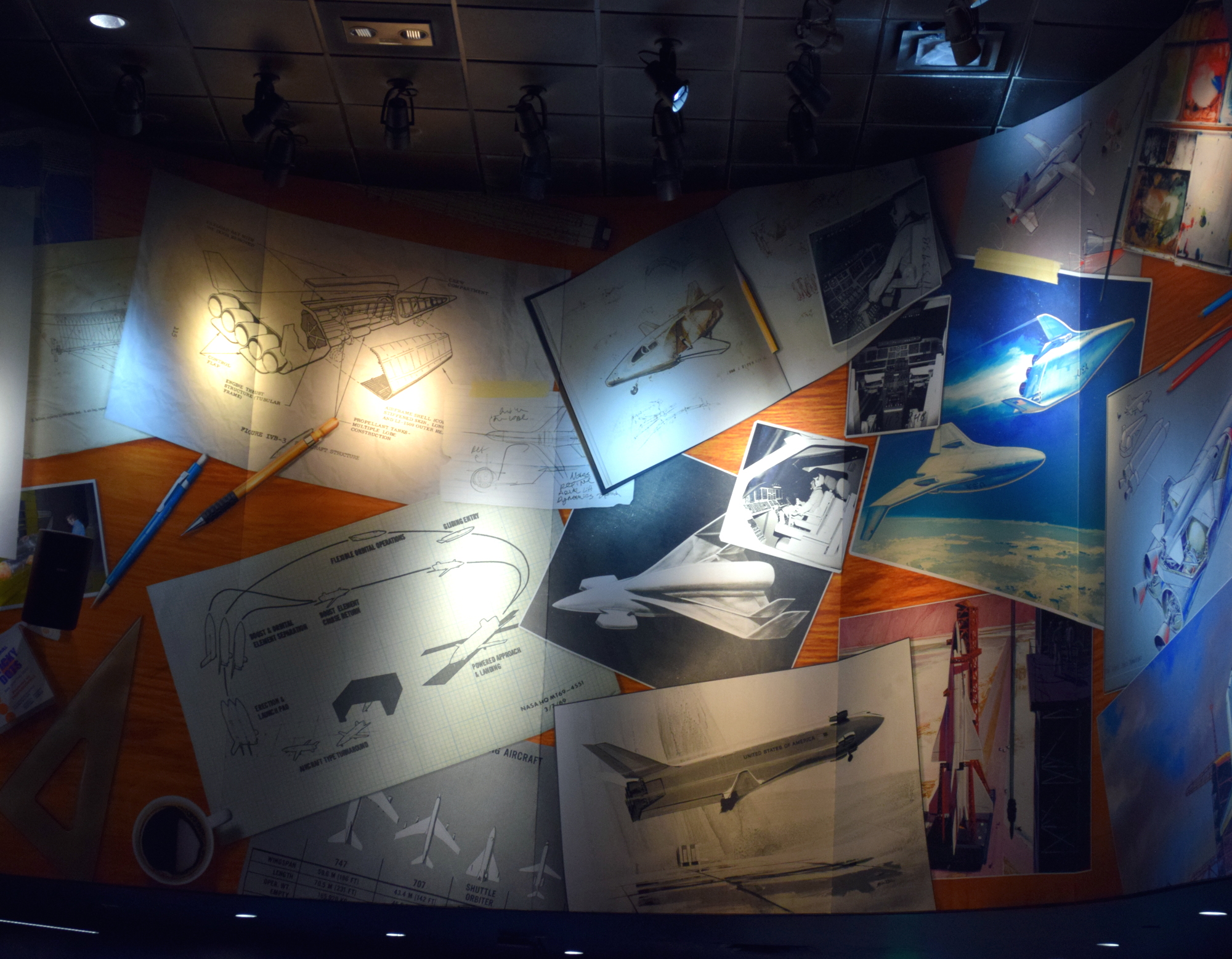 Of course, with the park closed we didn’t have to worry about the crowds. We were able to move swiftly through this area and directly into the theater. On either side of the screen, the walls were decorated with classic pulp art concept images of vehicles which only bore only a passing resemblance to the final Space Shuttle, a hint about the sort of presentation we were about to see. A KSC staffer then spoke up and said we’d be watching a twelve minute film about the origins of the Space Shuttle’s radical design, and the challenges of turning it into reality.
The film itself was fairly well done, though it did have that somewhat hokey feel which seems a hallmark of historical reenactments. They even did a respectable job aging the actors who were playing the various engineers attached to the project as they went through the decades-long development process between Max Faget’s early concepts for a winged orbiter and the first Shuttle flight in 1981.
That said, it did strike me as somewhat of an odd presentation for Atlantis. The design and construction process shown in the film was obviously for Columbia, the first operational Shuttle which was tragically lost in 2003. I can understand the desire to show the origins of the Shuttle program, but the way it was presented, I got the impression most people would be led to believe they were about to see the “original” Space Shuttle.
After the film was completed we were led into yet another theater, this time much smaller and with a wrap-around projection screen. Here you’re treated to real-life footage of the Shuttle during launch and landing, with computer generated renderings standing in for when the Shuttle was in space.
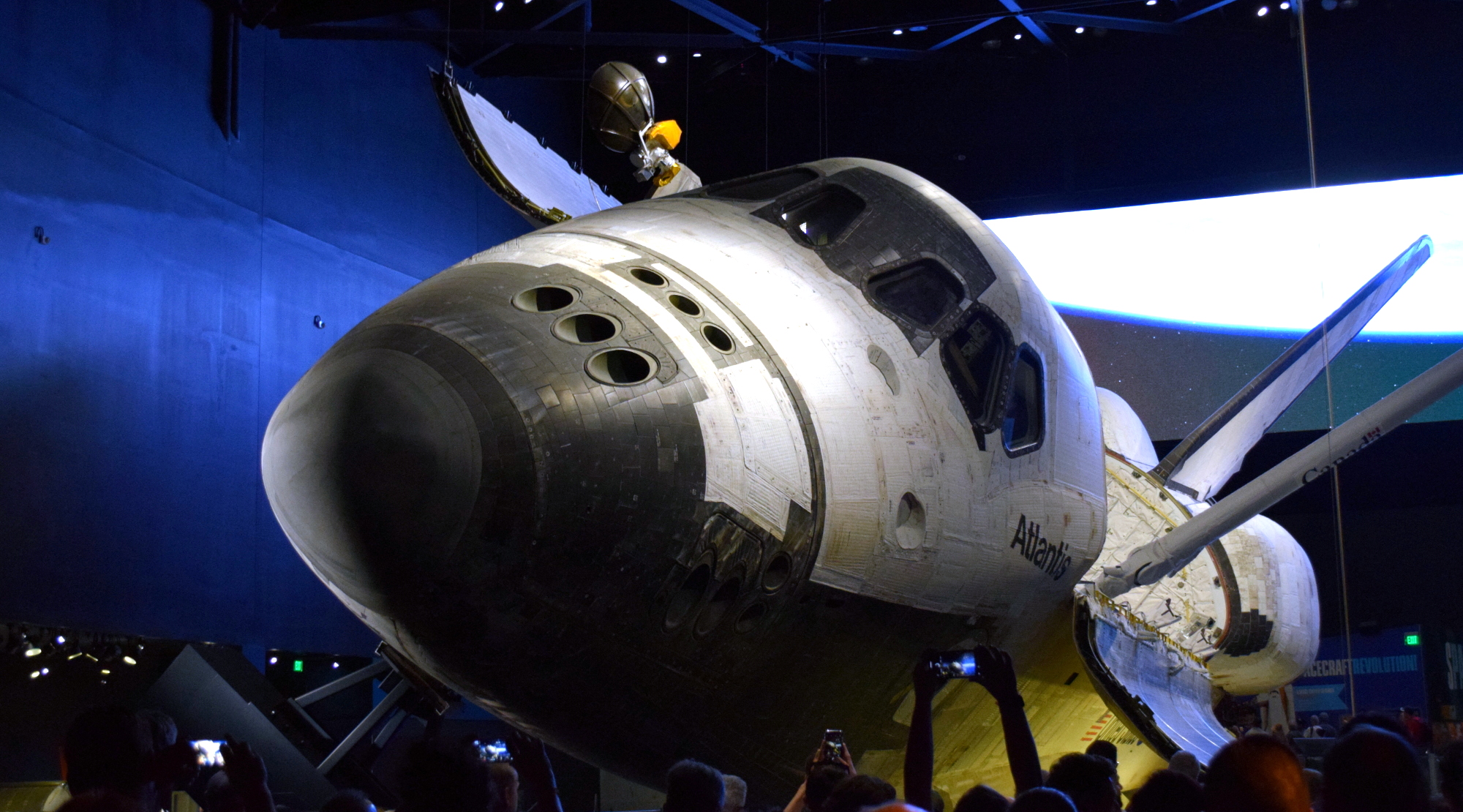
In the final moments of the presentation, Atlantis is shown in space, advancing towards the viewer. To the sound of fanfare, the screen retracted into the ceiling and revealed the real Shuttle behind it, suspended at the same rakish angle it was in at the end of the video. It was an impressive effect, and more than a few genuine gasps could be heard among the audience.
In the Presence of a Giant
We’ve all seen pictures and video of them, but if you’ve never seen one in person, you might not realize how incredibly big the Space Shuttle actually is. When the screen went up and the audience realized this mammoth spaceplane had its nose just a few paces away from us the whole time, it was quite intimidating. Maybe even a little frightening, on some subconscious level. Suspended at an otherworldly angle, robotic arm outstretched over your head, you almost can’t believe its real. Indeed, I overheard several of the students asking each other if it was the real Atlantis, or some kind of mock-up created for the exhibit.
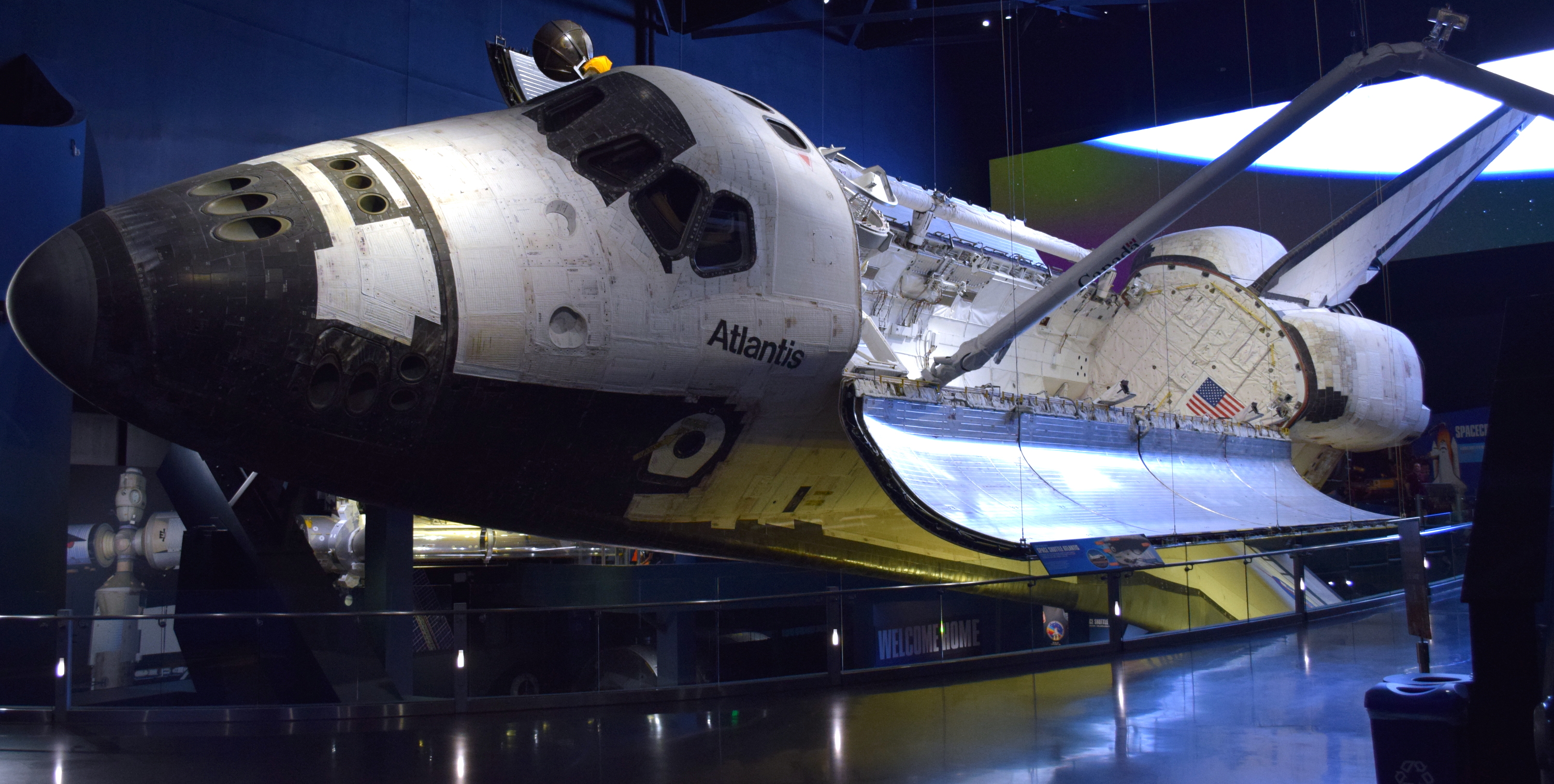
On this level, a walkway goes the entire length of the orbiter, which gives you the closest view possible. With the skin of the craft perhaps only 4 feet away from you, you can appreciate all of the tiny surface details which never really come through in pictures. Many of the observers were surprised to see that the skin of the craft isn’t smooth like an airplane, instead, it’s a literal patchwork of thick and lumpy thermal protection blankets. I know it’s a thought completely unbefitting such a marvelous machine, but up close, I couldn’t shake the feeling that it looked sort of like a plush child’s toy.
There’s also an elevated platform that allows you a slightly higher vantage point. This gives a good view into the empty cargo bay, and another opportunity to realize just how big the vehicle is. All of the people in attendance could have comfortably fit inside the cavernous space with room to spare.
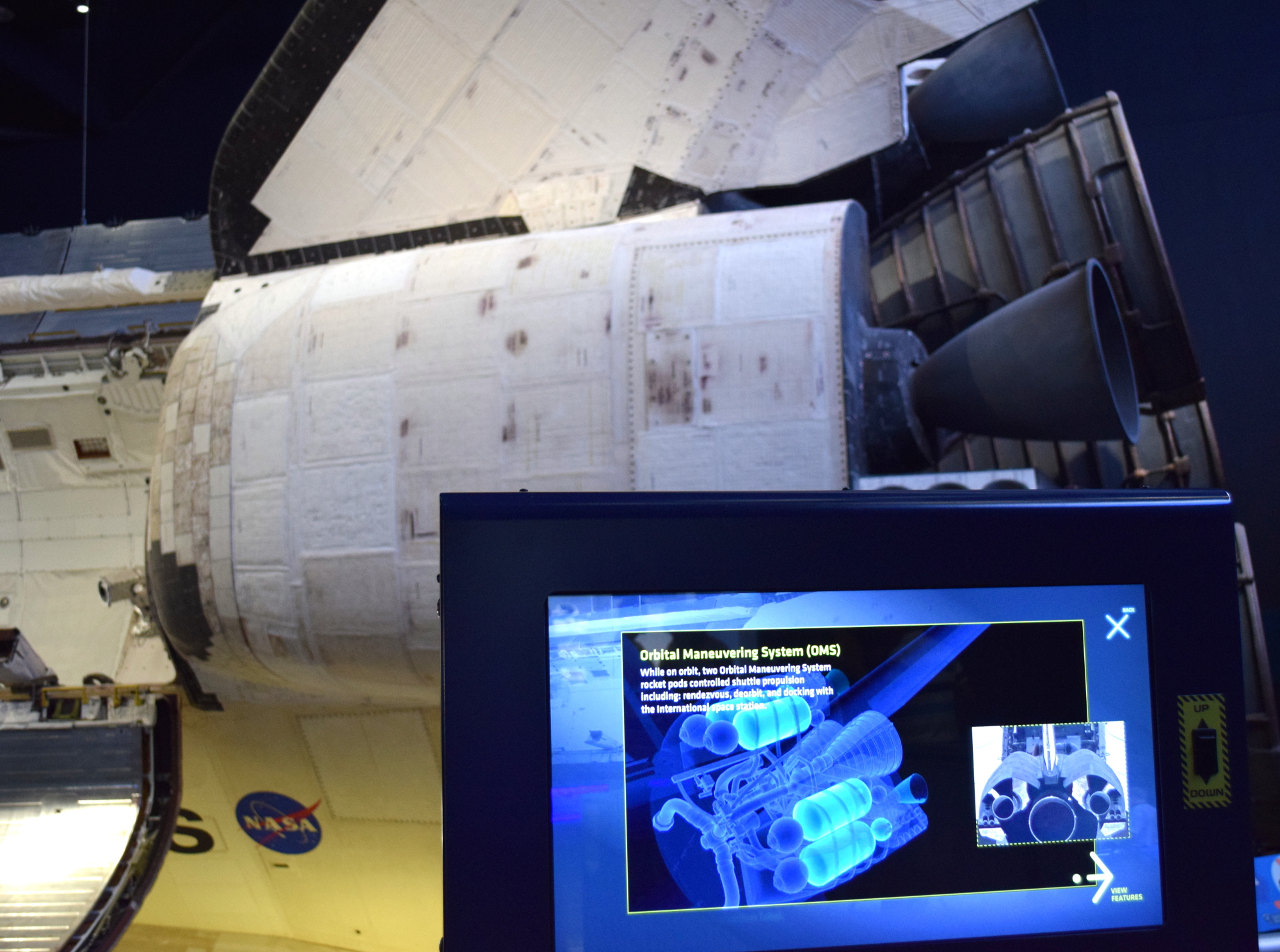 Dotted along this walkway are augmented reality terminals, which superimpose labels for the various components of the spacecraft over the live video feed from a camera mounted on the back. You could touch the different icons to get a brief description about that particular system and close-up 3D renderings.
It was an interesting setup, but I have to admit that the augmented reality aspect seemed pointless. The terminals don’t move beyond a vertical adjustment for viewers of different heights, so it seems like they could have simply superimposed the information over a still image of that section of the Shuttle. Hopefully in the future they’ll be able to improve the system and allow you to actually pan the terminals left and right to get information on different sections of the craft.
Humble Beginnings
Once you get your fill of looking at Atlantis herself, you descend to the ground floor of the building where the majority of artifacts and displays are actually located. Here you can see various relics such as two of the Michelin tires that flew on the final mission of the Shuttle program, and the “beanie cap” vent hood that was used to vent gaseous oxygen away from the External Tank prior to liftoff.
They were all fascinating in their own way, but for me one of the most impressive objects on display here was a small balsa glider. Max Faget built this small model in April of 1969 to show demonstrated his idea for a spacecraft that would launch vertically like a rocket and land horizontally like an airplane.
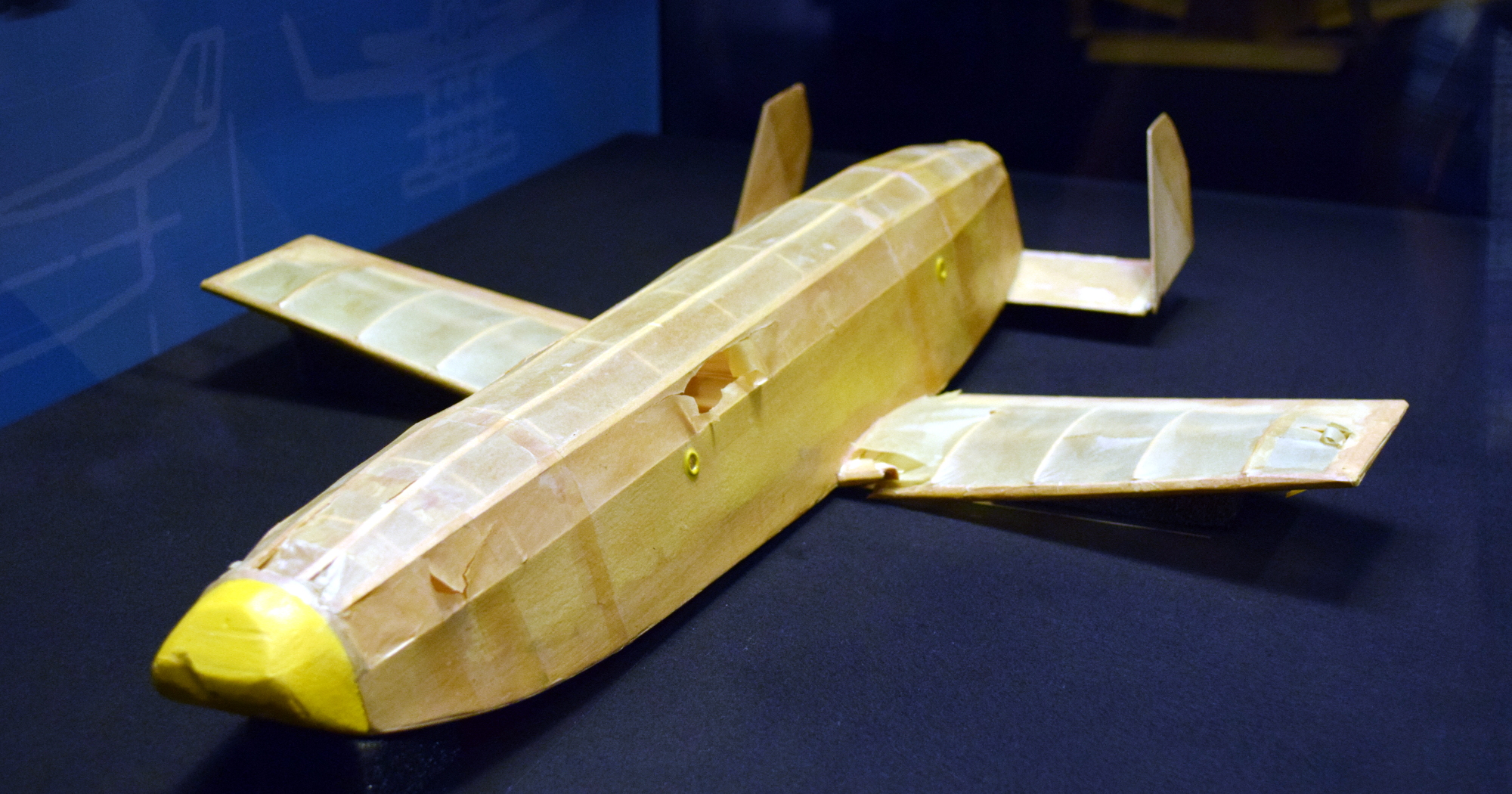
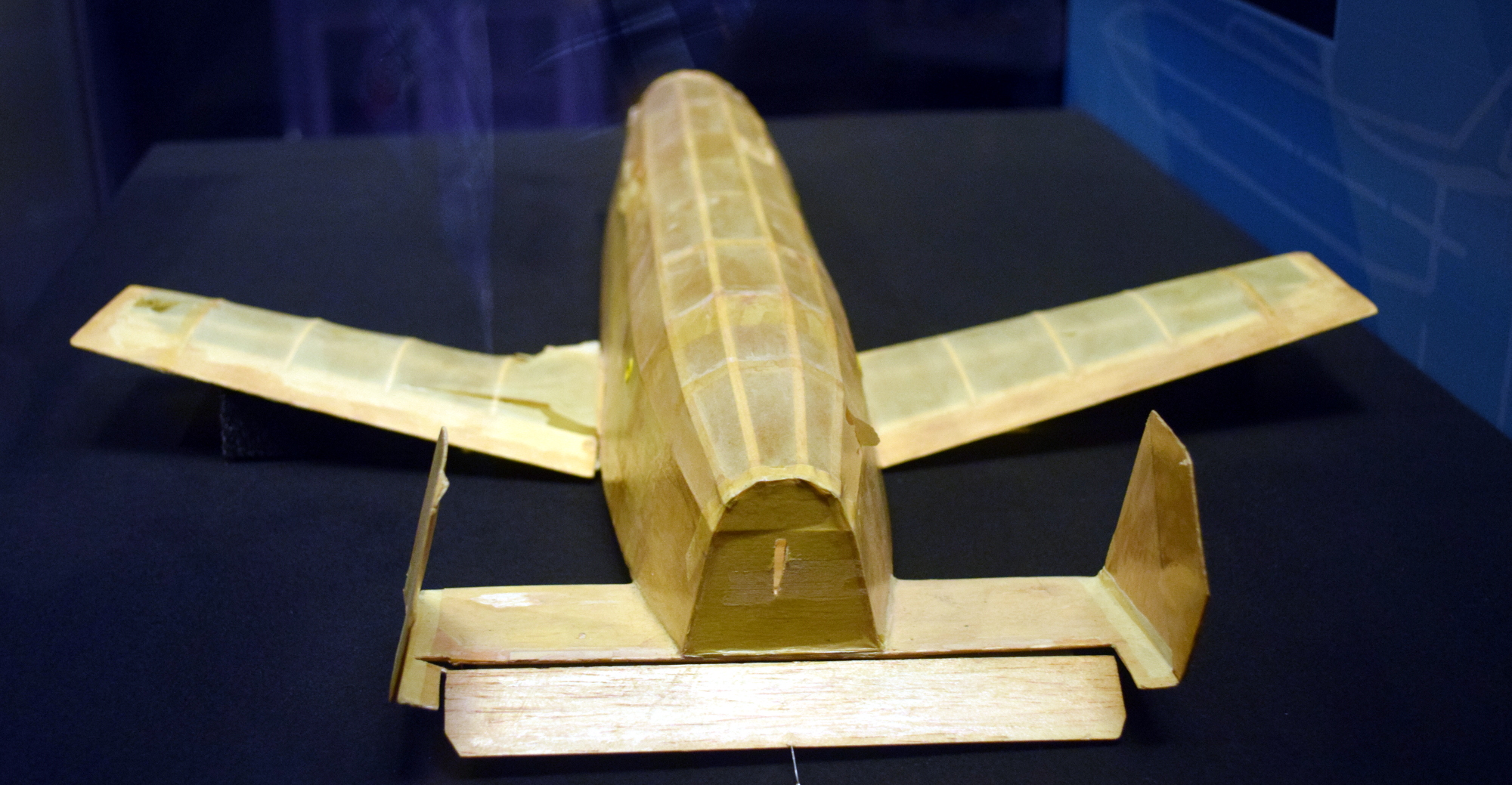
On the whole it’s almost unrecognizable as the origin point for the Shuttle suspended in the air above it. There’s only the slightest hints of family resemblance: a slightly upswept nose, boxy fuselage, and the large “body flap” control surface at the tail. Still, this little model was the first step towards a fundamental shift in spacecraft design.
Honoring the Fallen
Situated in such a way that you can’t leave the building without seeing it, there is a quiet area of the Atlantis exhibit that’s dedicated to the fourteen astronauts who lost their lives during the Shuttle program. Personal effects for each astronaut, donated by their families, are displayed in lighted boxes that line a short hallway leading into a silent and dimly lit room. Here visitors are presented with a rare and sobering sight: a large section of Challenger’s fuselage, along with the cockpit window frames from Columbia.
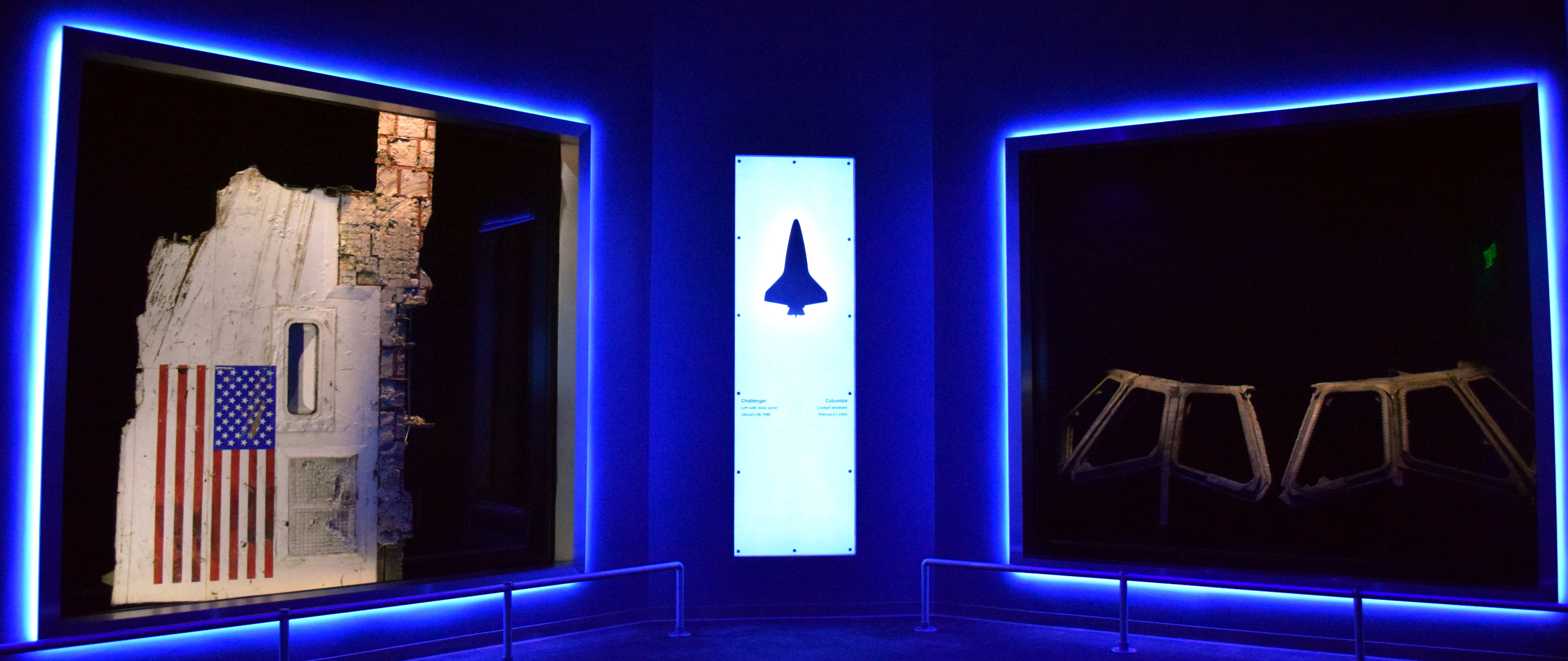
By having visitors walk through the snapshots of the fourteen astronaut’s lives before seeing the wreckage, the memorial makes it clear that while the destruction of Challenger and Columbia had a profound effect on the Shuttle program and NASA as a whole: it was the human element that should never be forgotten.
Mission of Inspiration
As I said at the start, this brief account of my experience is no substitute for actually seeing the Atlantis exhibit in person. These are the elements that stood out to me the most, but represents only a small fraction of everything there was to see and do. From the very impressive Shuttle launch simulator to the full-scale model of the Hubble Space Telescope, there’s so much packed into this one building that no two visitors will have the same experience.
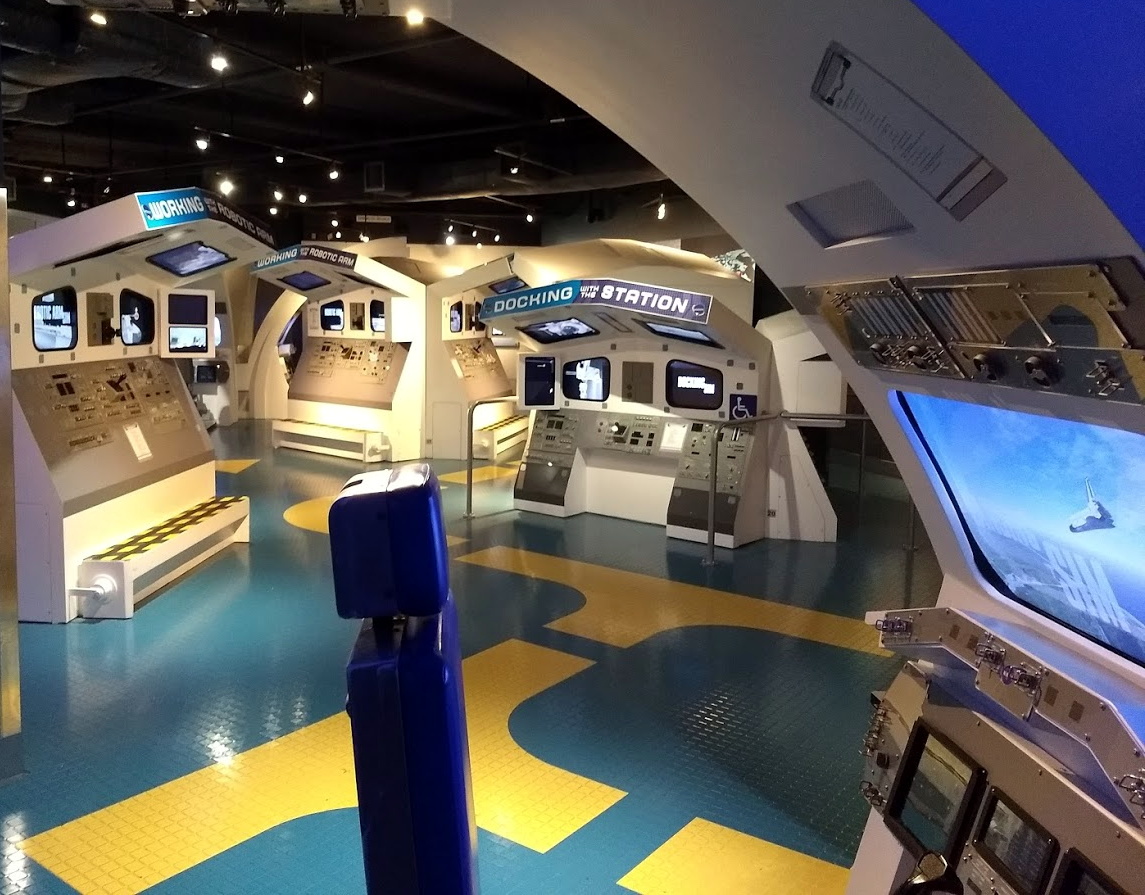
But no matter what course you plot through the permanent home of Space Shuttle Atlantis, one thing is abundantly clear: NASA did an incredible job honoring the program and making it accessible to visitors of all ages with this exhibit. While the general consensus is that retiring the Shuttle fleet without a clear successor was a mistake, and that the American space program is still feeling its impact, seeing how a room full of college students crawled over every inch of the exhibit made me realize it’s really something of a double-edged sword.
The public never had this level of access to the Shuttle during its operational years, and now that they’re retired, they’ll serve to inspire future generations of scientists and engineers in a way that wasn’t possible before. Atlantis may never fly again, but clearly her mission is far from over.