More than two years ago, the largest dam in the United States experienced a catastrophic failure of its main spillway, the primary means by which operators of the dam prevent the lake from cresting its pen. The spillway failure caused so much erosion that the hydroelectric plant could not operate, further worsening the situation. In a few days, the dam was finally put to its design limitations, and water began flowing down an emergency spillway that had never been used, prompting the evacuation of 188,000 people living in downstream communities.
Since the time that this crisis came to a head, crews have been working around the clock to repair the main and emergency spillways in order to ensure that one of the largest pieces of infrastructure in the wealthiest country in the world does not suffer a complete failure. The dam’s spillways were reopened recently on April 2, in time for this year’s snow melting, and so far everything looks good.
The repair work was a true feat of engineering, and perhaps a logistics miracle as well. The video below goes over a lot of the raw materials inputs that were needed, but the one that stuck out the most was that a dump truck full of roller-compacted concrete was emptied every five minutes over the entire course of the repair — enough to build a sidewalk from the Oroville Dam to Texas. Part of the reason for the use of such an incredible amount of concrete was that it wasn’t just used to repair the main spillway. An enormous “splash pad” for the emergency spillway was also constructed to limit erosion in the event that it must be used again. But the full change goes beyond concrete and rebar. Join me after the break as I try to wrap my mind around the full scope of the Oroville Dam repair.
Won’t Somebody Think of the Fish? (Actually, They Did)
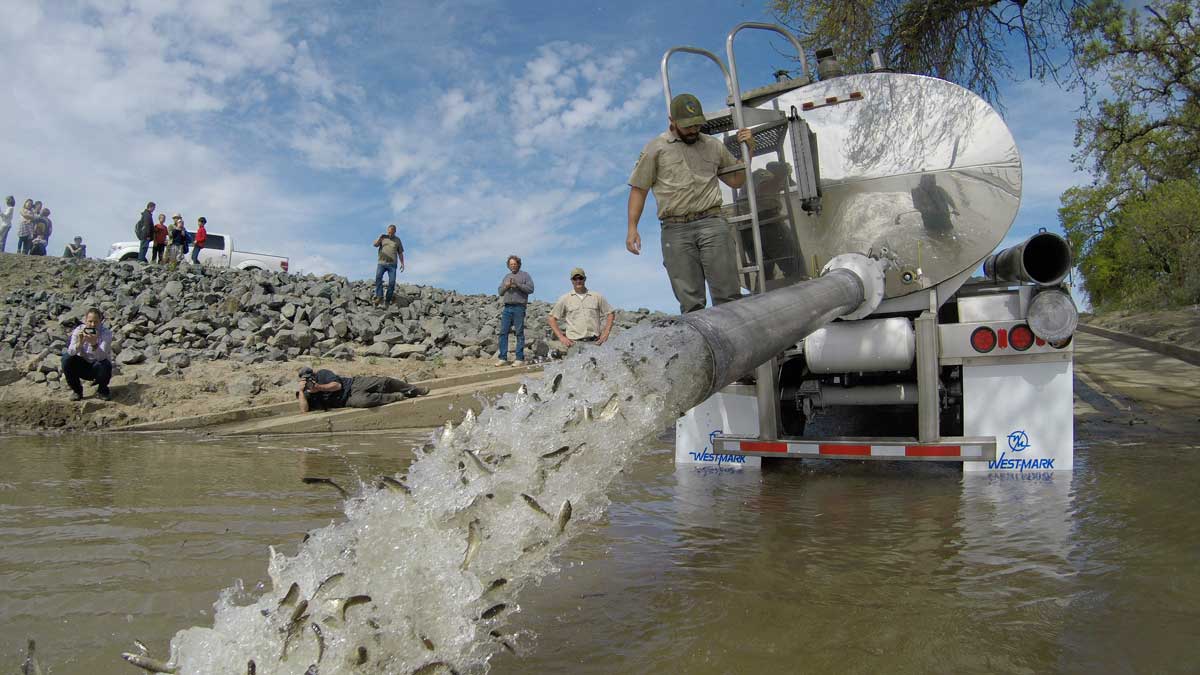
Fixing the dam itself wasn’t the only task that needed to be accomplished. The sediment that collected in the basin below the dam was so great that the fish in the river couldn’t get access from one side to the other. That meant millions of small fish had to be trucked around the area, from various fisheries and ponds, to and from the river, in order to keep the population from collapsing.
The other, perhaps more obvious, issue that the sediment in the lower basin was preventing the power station from running at all. Since the generators are situated at the base of the dam, the blockage that was caused by the extreme erosion prevented any outflow from this part of the dam. Before restoring the ability of the generators to run (and lower the lake level some as a side effect), all of the debris had to be removed before the real work of repairing the main spillway could be finished.
Once repairs were complete, dam operators tested out the main spillway with a small flow, and planned to increase the flow to a level greater than that let out of the lake when the spillway first experienced problems two years ago. So far there have been no reported problems with the repaired spillway and the dam is operating as intended.
On the List of Largest Engineering Projects
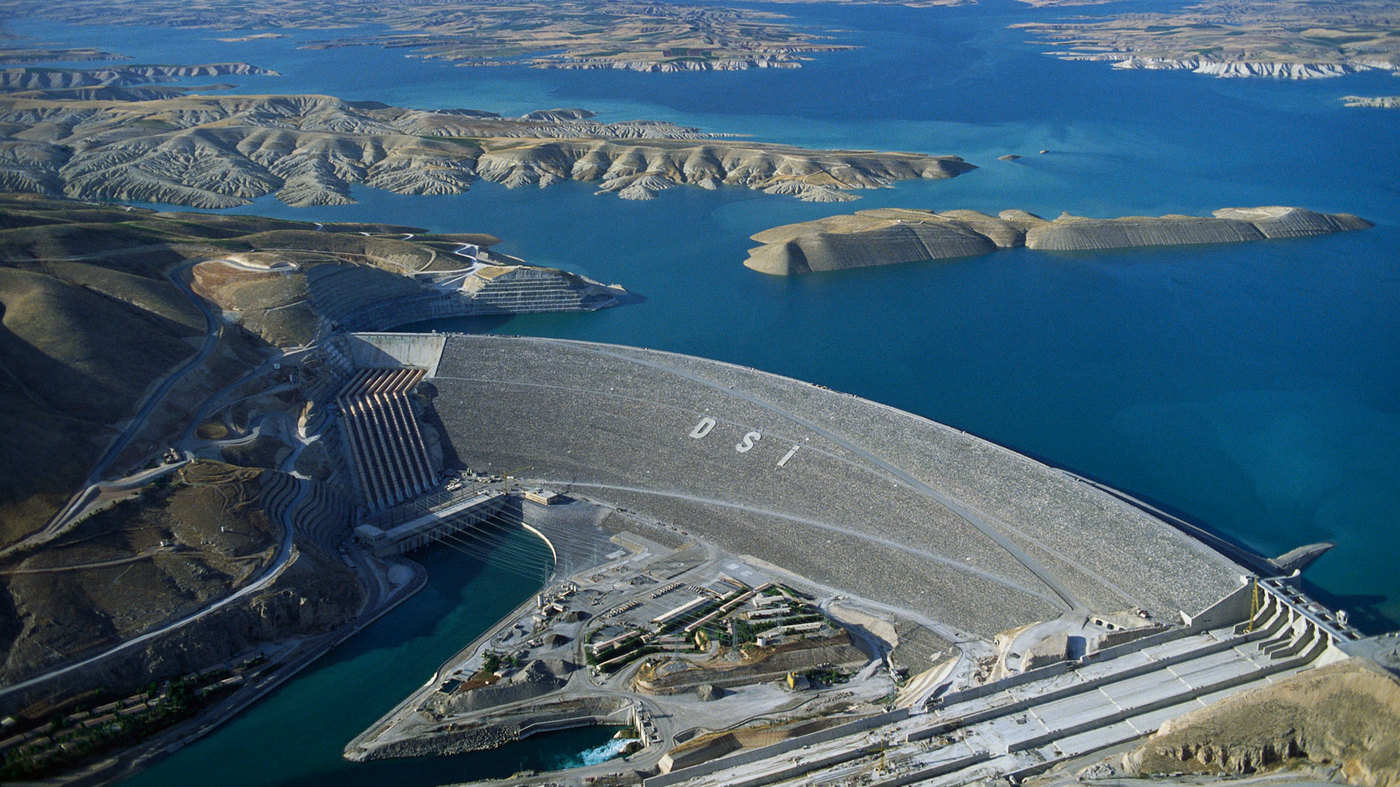
While the Oroville Dam was completed in 1968 it was among the largest dams in the world, but still only the third largest in the United States alone by structure volume (although it is still the tallest). Since then it has been surpassed by only two other dams, the Atatürk Dam in Turkey and the Tarbela Dam in Pakistan. These were all constructed using earth, rock, or a combination of both to hold back the reservoir; other types of dams which require less building material but can reach similar (or greater) heights are concrete arch and gravity dams.
Concrete arch dams require a narrow valley of strong rock to build an effective structure, and gravity dams require a solid rock foundation in order to prevent the structure from sinking. Embankment dams, like Oroville, do not have these same requirements and can be built in areas with less strict requirements, although the downside is the enormous amount of material needed to construct them. This was part of the failure mode of the Oroville Dam’s emergency spillway, situated on the back side of the embankment. Since it was constructed of earth and not concrete, it was able to erode away rapidly which threatened the structural integrity of the dam.
Of course, arch and gravity dams are not immune to issues either. Spillways at the Hoover Dam suffered damage from cavitation in each of the two instances they were needed. At the Grand Coulee Dam, damage to the spillways occurred during a year with heavy rainfall when the spillways were used in a greater capacity than they had been in the past. Typically, though, these issues do not result in the type of damage seen at Oroville, and can even be prevented by draining the reservoir further down earlier in the season (although this is dependent on accurate weather forecasting).
A Dam Renaissance
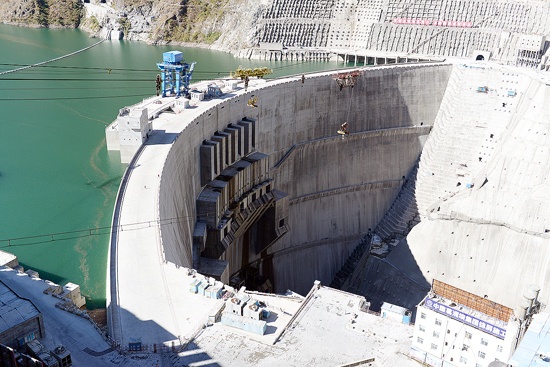
More dams are being constructed in developing countries now, as there are still an abundance of rivers with favorable qualities for constructing dams. Most of the available locations in developed countries are already used already for their power generation and flood control abilities. But in places like China there are a large number of opportunities. There have been few embankment dams built, however, as China seems to favor gravity dams like the Three Gorges Dam, noted for having the largest power generation ability of any dam in the world, or arch dams like the Jinping-I Dam.
While there are taller dams, dams which impound more water, larger dams, or dams which generate more electricity, with proper maintenance these dams will all hopefully be able to avoid any kind of Oroville-like issues in the future.
The Blame Game
Unfortunately, repairing the problems at Oroville is unlikely to be the end of the story. The current issue is deciding which level of government is going to pay for the $1 billion repairs. The federal government claims that this repair does not qualify for federal funds, since the failure of the dam was a result of poor management and maintenance practices. That means California is likely on the hook for the bill, and won’t be able to come up with the money easily.
Regardless of how the financial and political situation plays out, the crisis at the Oroville Dam can be viewed as an example of what is likely to happen to a majority of the rest of the bridges, dams, canals, and other critical infrastructure as maintenance budgets continue to stretch. Unfortunately, beating this dead horse has yet to result in any measurable change in policy, even after almost 200,000 lives were put at risk as a result of this specific incident alone.
Even if the piece of infrastructure is small, it isn’t immune from lack of maintenance. Even a small bridge on U.S. Highway 1 in Florida that experienced a critical structural failure late in 2017 still hasn’t been fixed yet, likely due to government squabbles, lack of funding, or both.
Perhaps the next time we cross a bridge, fly on an airplane, take a drink of water, or even turn on a light switch, we should consider the state of our infrastructure, from the large to the small. It might not all turn out as well as the Oroville Dam.