Machining is one of those fascinating fields that bridges the pre-scientific and scientific eras. As such, it has gone from a discipline full of home-spun acquired wisdom and crusty old superstitions to one of rigorously analyzed physics and crusty old superstitions.
The earliest machinists figured out most of what you need to know just by jamming a tool bit into spinning stock and seeing what happens. Change a few things, and see what happens next. There is a kind of informal experimentation taking place here. People are gradually controlling for variables and getting better at the craft as they learn what seems to affect what. However, the difference between fumbling around and actually knowing something is controlling for one’s own biases in a reproducible and falsifiable way. It’s the only way to know for sure what is true, and we call this “science”. It also means being willing to let go of ideas you had because the double-blinded evidence clearly says they are wrong.
That last part is where human nature lets us down the most. We really want to believe things that confirm our preconceived notions about the world, justify our emotions, or make us feel better. The funny thing about science, though, is that it doesn’t care whether you believe in it or not. So go get your kids vaccinated, and up your machining game with scientific precision. Let’s take a look.
Ditch Your Gut and Trust the Science
In the cutting edge world of modern machining, we must trust the science. We’re optimizing for the long tail of efficiency now, and gut feel doesn’t cut it anymore. On high end CNC equipment, spindle traversal speeds are in the neighborhood of 25 inches per second (about 64 cm per second). A wise machinist once said, “At those speeds, the E-Stop button is entirely decorative”. More importantly, at these speeds, physics really really matter. Crashing a spindle at full rapids on an $80,000 machine is not something your boss lets you forget.
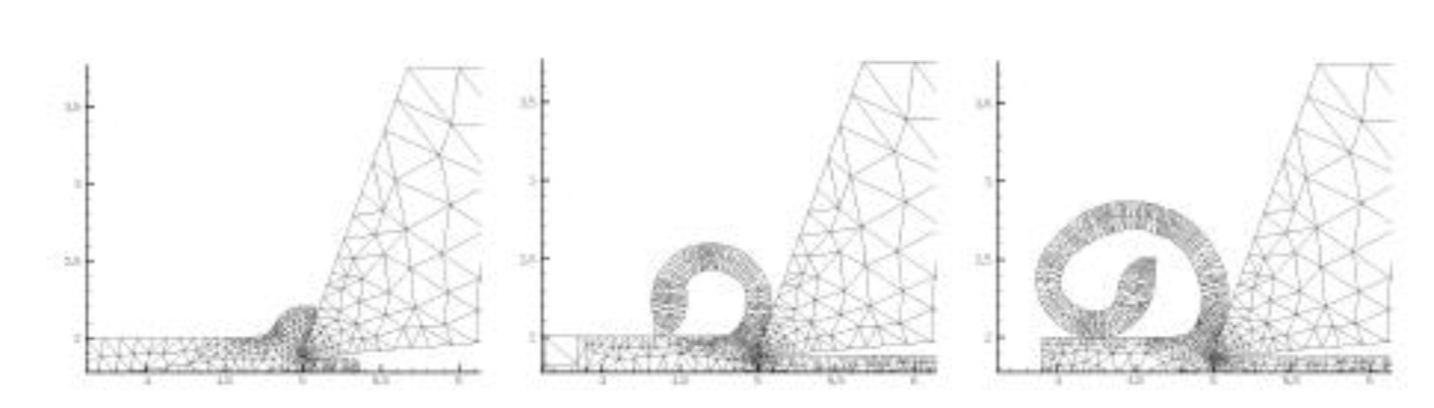
Proper chip formation is now something we understand at a very basic level, thanks to modern tools like finite element analysis. We can perform simulations of the physics that are happening at the tool/material interface, and perform experiments to determine the optimal tool angles, cutting fluids, and so forth. When you’re trying to remove material as efficiently as possible, while minimizing tool wear and maximizing surface finish quality, this level of understanding becomes necessary.
The Physics of Better Surface Finishes
For example, machinists have long known that 8-15° is the ideal back rake for a cutting edge when machining steel. On the lathe, this manifests as the angle at which the top surface of your tool bit is ground to fall away from the cutting edge.
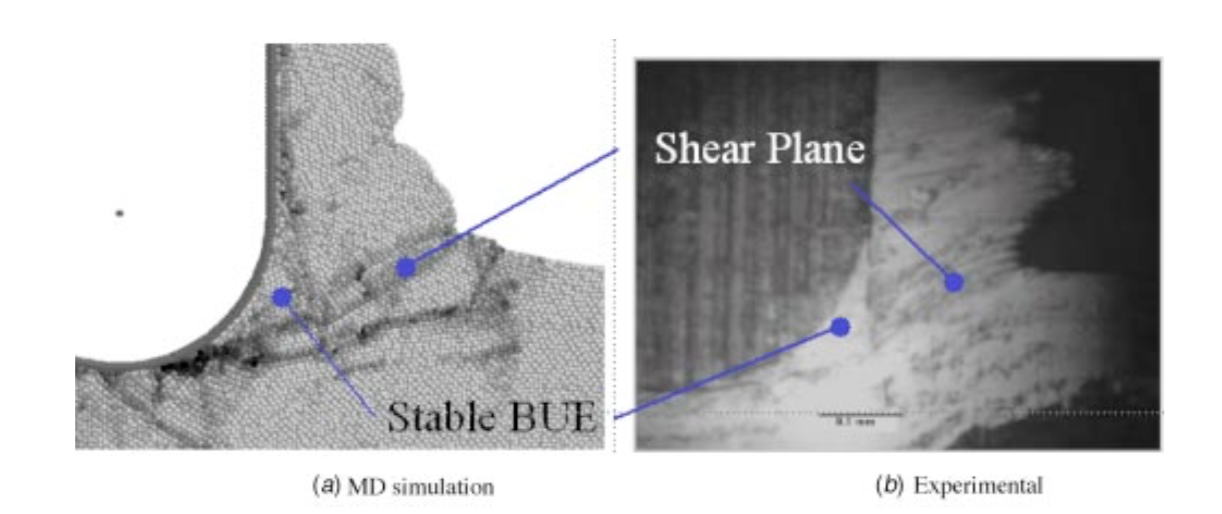
Through modern physics and simulation of the machining process, however, we now also know that, if the angle and speed are just right, the steel chip can actually enter a plastic flow state as it encounters this back rake surface. This optimizes the speed at which that steel gets out of the way, increases material removal efficiency, and prevents buildup on the cutting edge (which compromises surface finish).
We’re going to be talking more about how we know what we know in machining, so watch this space. Until then, find the oldest machinist in the room and ask them what they know, because it’s a lot more interesting than reading research papers, and gets you 80% of the way to the same place (but keep your rapids at 20% for now).