There’s no shortage of ways a satellite in low Earth orbit can fail during the course of its mission. Even in the best case scenario, the craft needs to survive bombardment by cosmic rays and tremendous temperature variations. To have even a chance of surviving the worst, such as a hardware fault or collision with a rogue piece of space garbage, it needs to be designed with robust redundancies which can keep everything running in the face of systemic damage. Of course, before any of that can even happen it will need to survive the wild ride to space; so add high-G loads and intense vibrations to the list of things which can kill your expensive bird.
After all the meticulous engineering and expense involved in putting a satellite into orbit, you might think it would get a hero’s welcome at the end of its mission. But in fact, it’s quite the opposite. The great irony is that after all the time and effort it takes to develop a spacecraft capable of surviving the rigors of spaceflight, in the end, its operators will more than likely command the craft to destroy itself by dipping its orbit down into the Earth’s atmosphere. The final act of a properly designed satellite will likely be to commit itself to the same fiery fate it had spent years or even decades avoiding.
You might be wondering how engineers design a spacecraft that is simultaneously robust enough to survive years in the space environment while at the same time remaining just fragile enough that it completely burns up during reentry. Up until fairly recently, the simple answer is that it wasn’t really something that was taken into account. But with falling launch prices promising to make space a lot busier in the next few years, the race is on to develop new technologies which will help make sure that a satellite is only intact for as long as it needs to be.
The Sky is Falling
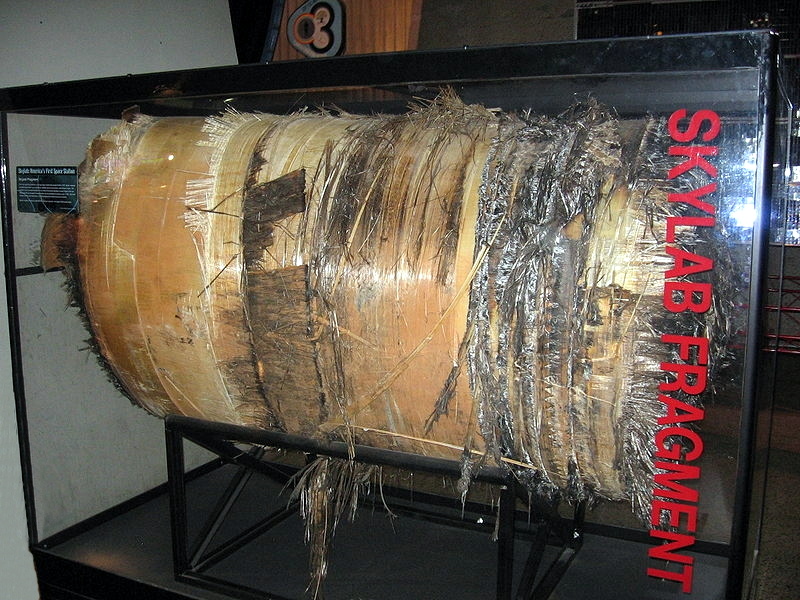
The possibility of debris surviving reentry and hitting the ground is nothing new, and there are documented cases going back for about as long as we’ve been shooting things into space. Arguably the most famous example was in 1979, when wreckage from Skylab was strewn all over the Australian outback. The largest pieces, such as the tanks that held oxygen aboard America’s most persnickety space station, tipped the scales at hundreds of kilograms. Luckily these massive objects came down in one of the most scarcely populated stretches of land on the planet, but had they come down in a major city the damage and risk to human life could have been considerable.
What’s changed is how many objects we can expect to be reentering the atmosphere in the near future. When only the world superpowers had the ability to put something into space, it was relatively easy to keep track of when things were coming back down. But increased competition has dramatically reduced the cost of putting satellites into orbit, and now companies are looking at space investments which would have been simply impossible just a decade ago. Companies like SpaceX, OneWeb, and Samsung are eyeing satellite mega-constellations consisting of thousands of individual spacecraft, and each one of them will eventually come careening back down through the atmosphere at the end of its nominal lifespan.
In a letter dated February 26th, the Federal Communication Commission specifically asked SpaceX to detail their plans for deorbiting the thousands of satellites in their proposed Starlink network. They wanted to know if SpaceX can ensure that the craft will reenter over the ocean, and if not, to estimate the likelihood that falling debris could cause material damage or human casualties. The letter ends by stating that SpaceX’s application for Starlink approval could be dismissed if this information was not provided to the satisfaction of the FCC.
Unacceptable Risk
Directing a spacecraft to renter over the ocean has always been the standard way of ensuring that any debris that survive won’t cause any problems on the ground. Since most of the planet’s surface area is ocean anyway, this ends up being a relatively simple thing to do assuming your spacecraft is functioning normally and is capable of maneuvering itself. Though mistakes do happen; Skylab was actually supposed to reenter south of Africa, a slight error in the calculations caused it to overshoot considerably eastwards.
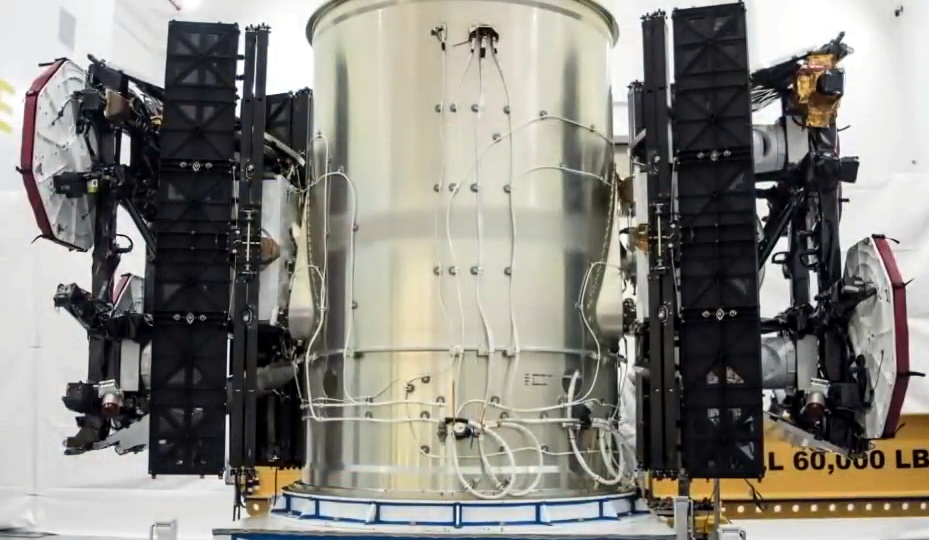
But SpaceX’s proposed Starlink satellites (and others like it) are something of a special case. They utilize high efficiency Hall-effect propulsion which is ideal for occasional orbit adjustments and station-keeping, but lacks the thrust necessary to put the craft on a targeted reentry trajectory.
In other words, the satellites are capable of lowering their orbit enough to ensure they will burn up, but can’t pinpoint where it will happen with sufficient accuracy to make any guarantees. That might be an acceptable risk when dealing with just a single satellite, but long-term Starlink plans call for as many as twelve thousand of them. With that many craft in play, the chances that one of them could break up over a populated area is simply too high.
In their official response to the FCC, SpaceX explained that while they were unable to guarantee that Starlink satellites would only reenter the atmosphere over the ocean, they had come up with a solution which would make it unnecessary. After “extensive research and investment”, SpaceX says they’ve refined the design of their Starlink satellites to ensure they’ll completely burn up in the atmosphere.
Design for Demise
The idea of designing satellites in such a way that they will burn up entirely during a normal reentry has been floating around for decades, but so far has struggled to catch on. Referred to as “Design for Demise” or D4D in the industry, its biggest proponent has arguably been the European Space Agency which has made it a central theme in their overall “Clean Space” initiative. As you might imagine it’s a complex subject, but at the risk of oversimplifying things, there are essentially two main approaches: designs which break up into smaller pieces upon entering the atmosphere, and the use of materials which cannot survive the intense heat of reentry. These two ideas are not mutually exclusive, and indeed would likely be used together for best results.
For example, rather than holding a satellite together with nuts and bolts, it could be glued together with epoxies which are formulated to break down at high temperatures. Once the spacecraft hits the atmosphere and starts warming up, the epoxy gives way and the structure simply falls apart. Not only does this technique reduce the number of large objects that could conceivably come through the atmosphere intact, but it also opens up the interior of the spacecraft to the flow of hot atmospheric gasses which will promote more complete burning.
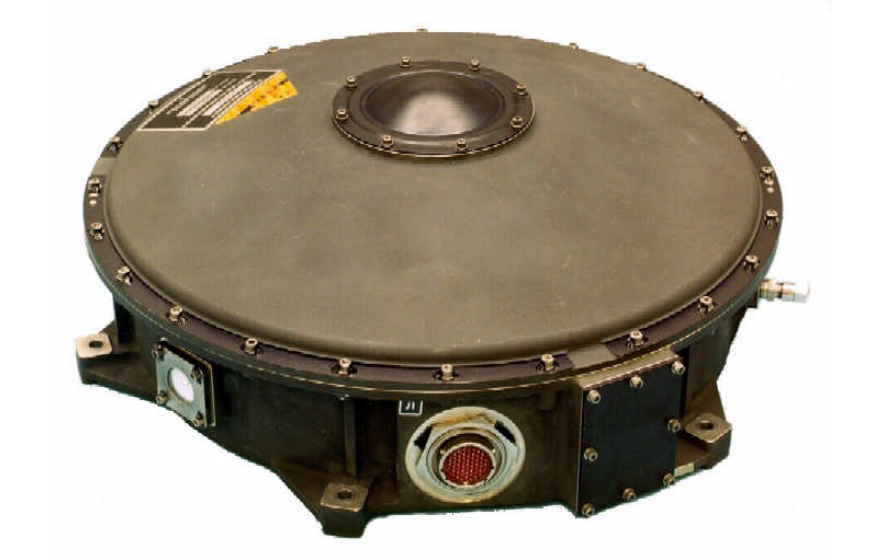
Even still, there are some components of the average satellite which are robust enough that they could conceivably survive. Likely candidates are titanium propellant tanks, silicon carbide mirrors (used in optical telescopes or laser communications systems), the iron cores of the Hall-effect thrusters, and the heavy stainless steel reaction wheels used to provide attitude control for the spacecraft. These components pose a considerably trickier problem, as the materials used in their construction were obviously selected for a reason. As an example, replacing a stainless steel reaction wheel with an aluminum one of the same diameter simply wouldn’t work due to the differences in density. The whole system would need to be redesigned to take into account the material change.
According to their official response to the FCC, SpaceX says they’ve replaced these problem components with versions which they can guarantee won’t survive reentry. If true, it would be a huge milestone for D4D design, and likely the yardstick by which future large-scale satellite constellations will be measured. But not everyone is convinced that SpaceX has solved this complex problem as neatly as they say. In a statement to IEEE Spectrum, professor of mechanical and aerospace engineering at the University at Buffalo John Crassidis said he believes the claims are a bit too bold: “Anything can come through the atmosphere if you hit at just the right angle. If they’re guaranteeing it’s not going to cause an issue, then I’m going to have call BS on it.”