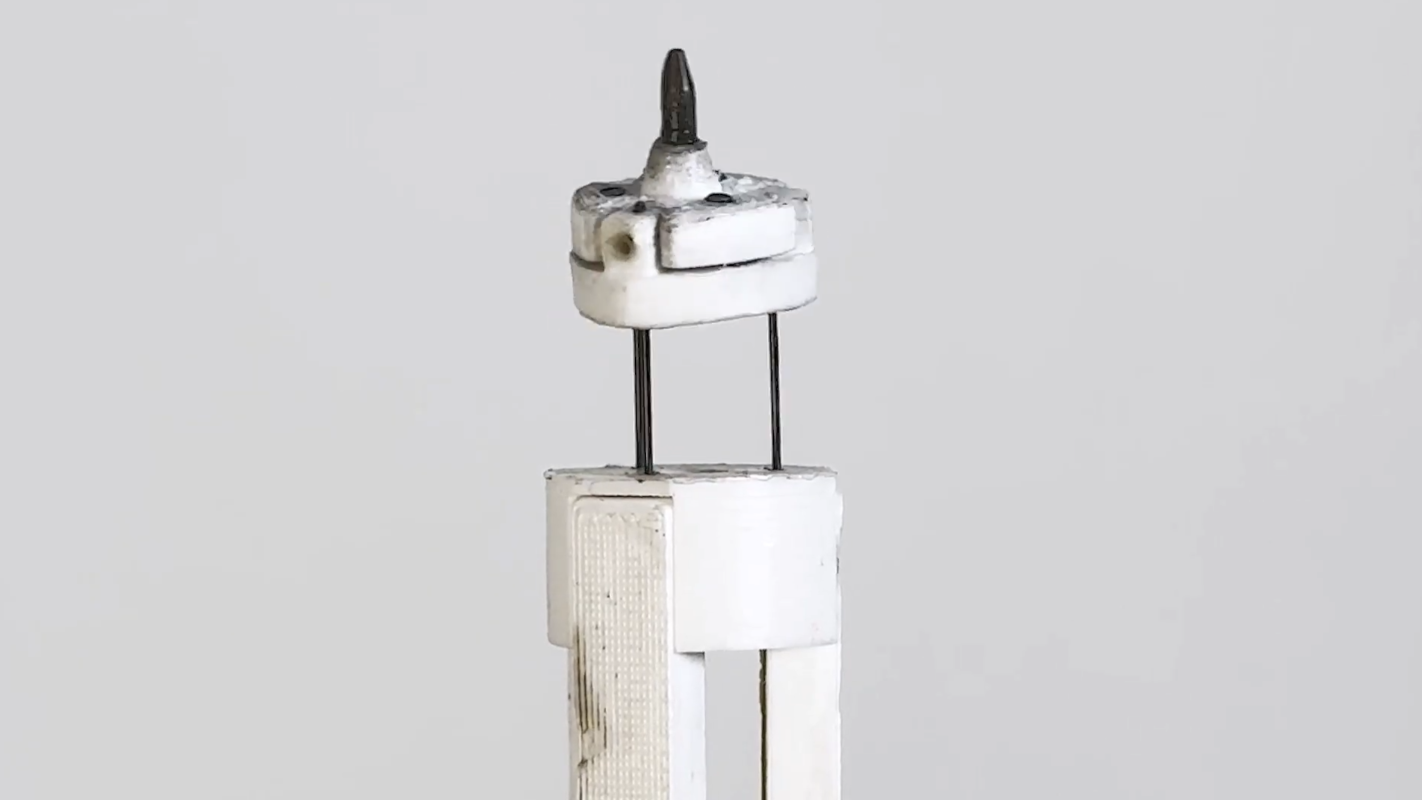
Emergent properties include examples like murmurations of starlings which can’t be predicted from looking at a single bird, weather which can’t be predicted by looking at a few air molecules, and consciousness which can’t be predicted by looking at a neuron. Likewise, when adding a new tool to a workflow, emergent properties can show up as well. A group at Chicago University developed a robotic drawing tool and a few artists developed some unique drawing methods using it.
The robotic pen uses a pair of tendons to extend the working end out a certain amount. From there it uses a set of servos to can be programmed to revolve around in a defined path, making repeating movements while the artist makes larger movements over the paper. Originally meant for shading, small circles or simpler back-and-forth movements were preset, but with full control over the pen’s behavior the artist can shift focus away to other tasks within the creative process. A study with ten participants was done which showed artists coming up with novel ways of using a tool like this, and others reporting that it’s almost like drawing together with another person.
Looking for novel ways that humans can interact with computers and robots can often lead to surprising outcomes like this. Members of this group aren’t new to novel human interface devices either; they’ve also built a squishy dynamic button as well.