
When it comes to electronic gadgets, I’m a sucker for a good deal. If it’s got a circuit board on the inside and a low enough price tag on the outside, you can be pretty sure I’ll be taking it home with me. So a few years ago, when I saw USB external hard drives on the shelf of a national discount chain for just $10, I couldn’t resist picking one up. What I didn’t realize at the time however, was that I’d be getting more in the bargain than just some extra storage space.
It’s a story that I actually hadn’t thought of for some time — it only came to mind recently after reading about how the rising cost of computer components has pushed more users to the secondhand market than ever before. That makes the lessons from this experience, for both the buyer and the seller, particularly relevant.
What’s in the Box?
It wasn’t just the low price that attracted me to these hard drives, it was also the stated capacity. They were listed as 80 GB, which is an unusually low figure to see on a box in 2026. Obviously nobody is making 80 GB drives these days, so given the price, my first thought was that it would contain a jerry-rigged USB flash drive. But if that was the case, you would expect the capacity to be some power of two.
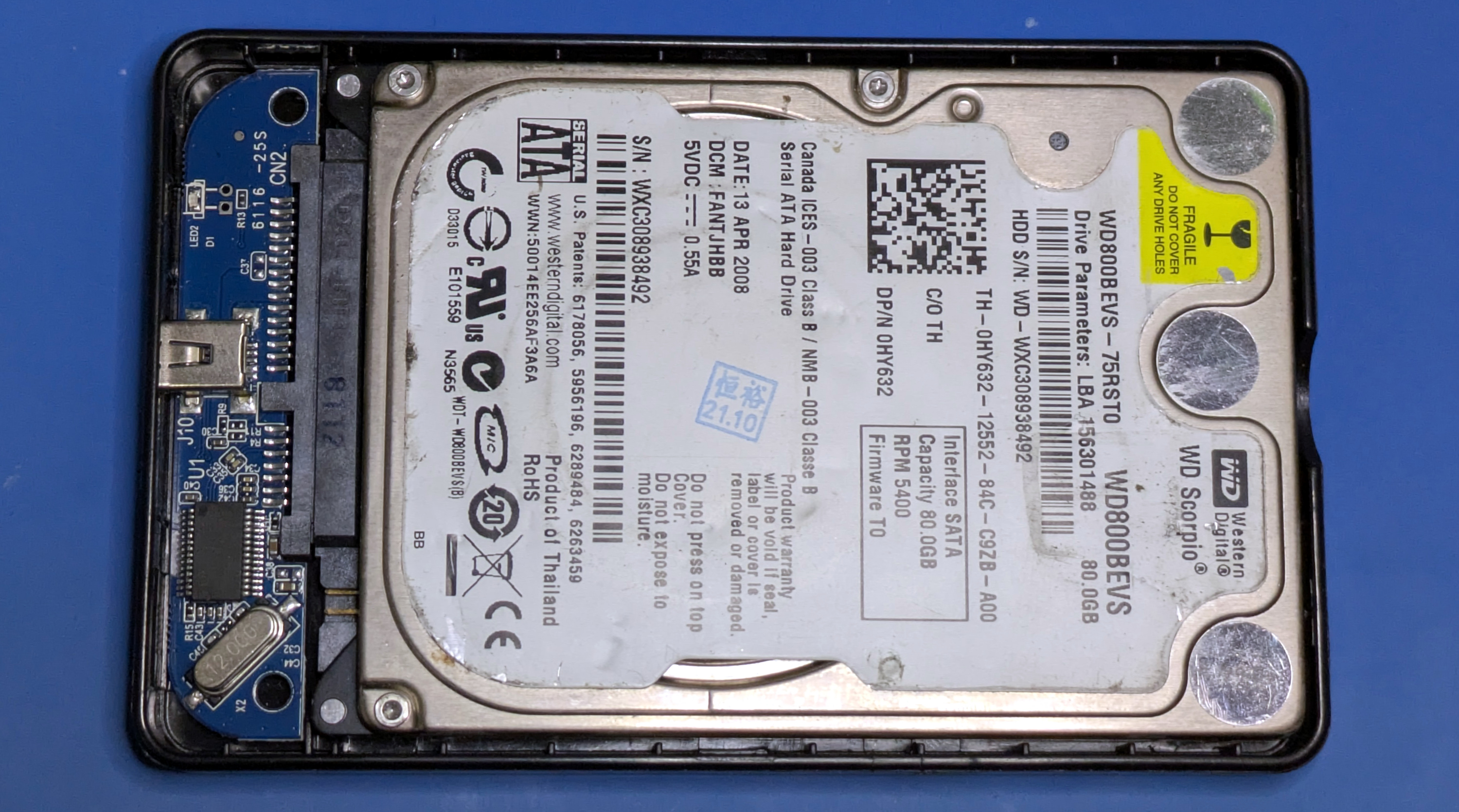
Upon opening up the case, what I found inside was somehow both surprising and incredibly obvious. The last thing I expected to see was an actual spinning hard drive, but only because I lacked the imagination of whoever put this product together. I was thinking in terms of newly manufactured, modern, hardware. Instead, this drive was nearly 20 years old, and must have been available for pennies on the dollar since they were presumably just collecting dust in a warehouse somewhere.
Or at least, that’s what I assumed. After all, surely nobody would have the audacity to take a take a bunch of ancient used hard drives and repackage them as new products…right?
Certified Pre-Owned
Once I saw that the drive inside the enclosure was older than both of my children, I got curious about its history. Especially given the scuff marks and dirt on the drive itself. A new old stock drive from 2008 is one thing, but if this drive actually had any time on the clock, that’s a very different story. Forget the implications of selling used merchandise as new — if the drive has seen significant use, even $10 is a steep price.
Fortunately, we can easily find out this information through Self-Monitoring, Analysis, and Reporting Technology (SMART). Using the smartctl tool, we can get a readout of all the drive’s SMART parameters and figure out what we’re dealing with:
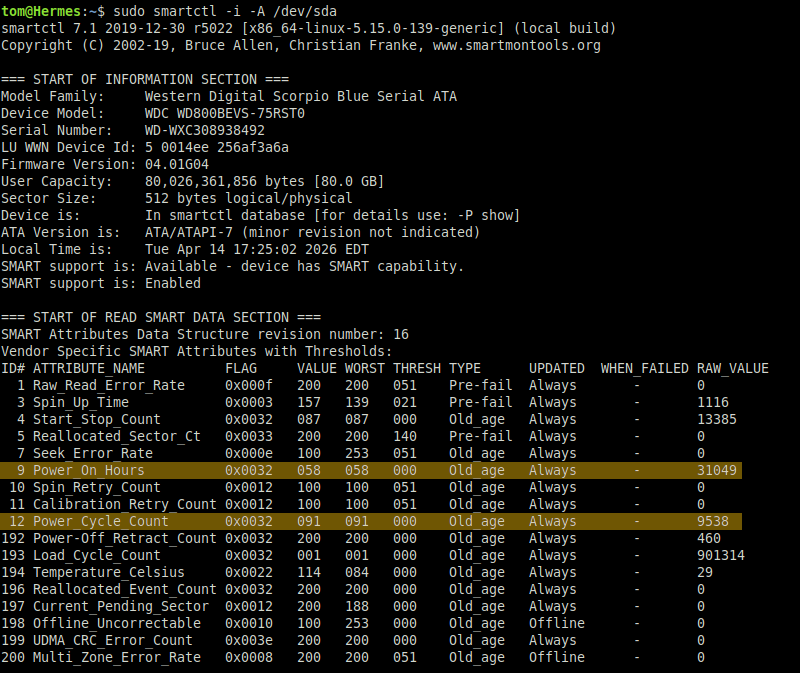
Well, now we know why these things are so cheap. According to the SMART data, this particular drive has gone through 9,538 power cycles and accumulated a whopping 31,049 hours of total powered on time. I’ll save you the math, that’s a little over 3.5 years.
The term “used” barely covers it, this drive has been beat to hell.
Buried Treasure
It’s a fair bet that anyone finding themselves regularly reading Hackaday possesses an inquisitive mind. So at his point, I’m willing to bet you’re wondering the same thing I did: if this drive has been used for years, could it still contain files from its previous life?
 Obviously it was formatted before getting boxed up and put back on the shelf. But frankly, anyone who’s unscrupulous enough to pass off decades-old salvaged drives as new probably isn’t putting in the effort to make sure said drives are securely wiped.
I was willing to bet that the drive went through nothing more than a standard quick format, and that even a simplistic attempt at file recovery would return some interesting results. As it so happens, “Simplistic Attempt” is basically my middle name, so I fired up PhotoRec and pointed it at our bargain drive.
It only took a few minutes before the file counters started jumping, proving that no effort was made to properly sanitize the drive before repackaging it. So not only is this drive old and used, but it still contains information from wherever it was for all those years. If it came from an individual’s personal computer, the information could be private in nature. If it was a business machine, the files may contain valuable proprietary data.
In this case, it looks to be a little of both. I didn’t spend a lot of time poring over the recovered files, but I spot checked enough of them to know that there’s somebody in China who probably wouldn’t be too happy to know their old hard drive ended up on the shelf in an American discount store.
For one thing we’ve got hundreds of personal photographs, ranging from vacation shots to formal portraits.




The pictures show fun in the sun, but the DOC and PDF files are all business. I won’t reveal the name of the company this individual worked for, but I found business proposals for various civil engineering projects within the Minhang District of Shanghai worth millions of dollars.
Once is Happenstance….
I know what you’re wondering, Dear Reader. If the first drive I pulled off the shelf happened to have a trove of personal and professional information on it, what are the chances that it would happen again? Perhaps it was a fluke, and the rest of the drives would be blank.
That’s an excellent question, and of course we can’t make a determination either way with only a single point of data. Which is why I went back the next day and bought three more drives.
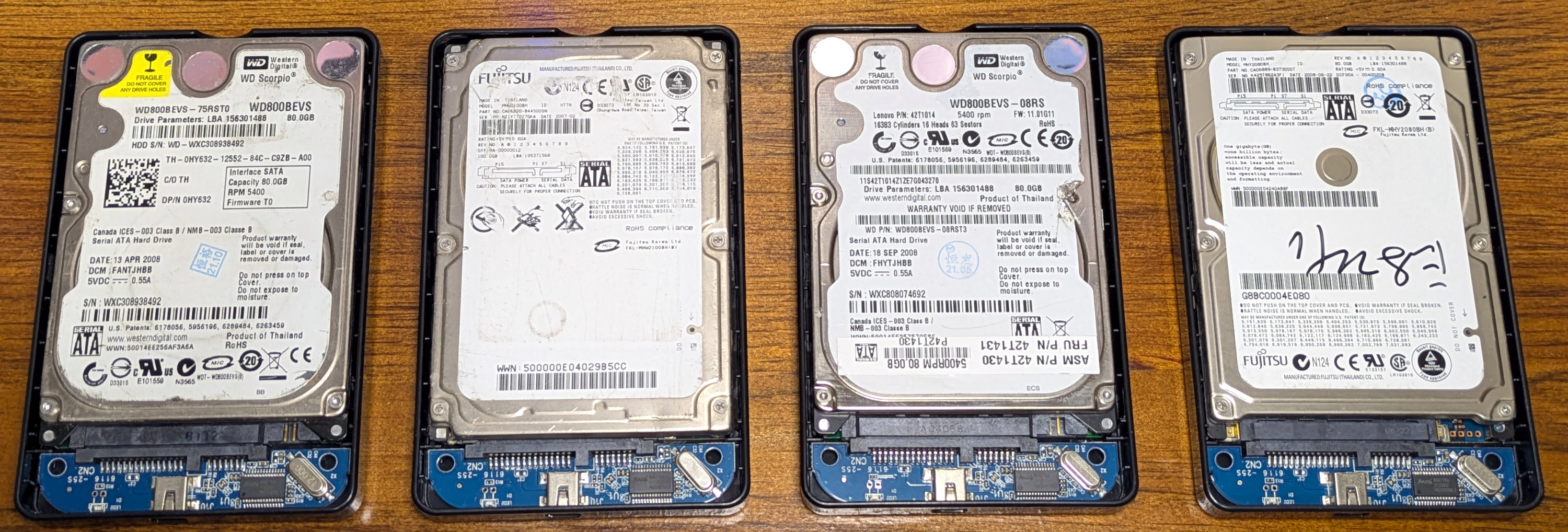
Right off the bat, it’s worth noting that no two drives are actually the same. Two are Western Digital and two are Fujitsu, but none of them have the same model number. The keen-eyed reader will also note that one of the drives is 100 GB, but it has been partitioned to 80 GB to match the others.
Three of the drives were manufactured in 2008, and one is from 2007. I won’t go through the SMART data for each one, but suffice it to say that each drive has several thousand hours on the clock. Although for what it’s worth, the first drive is the lifetime leader by far.
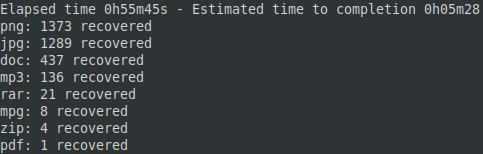 In terms of file recovery, each drive gave up several gigabytes worth of data. In addition to the one we’ve already looked at, two more were clearly the primary drives in Windows boxes, and each contained a mix of personal data and technical documents such as AutoCAD drawings, datasheets, bills of materials, and schematics. Given their contents, I would guess the drives came from off-lease computers that were used by engineering firms.
The fourth drive was different. It contained more than 32 GBs worth of Hollywood movies, the most recent of which was released in 2010. I imagine this drive came out of somebody’s media center. Now I haven’t sailed the high seas, as it were, since my teenage years, but even if I had wanted to add these titles to my ill-gotten trove of films, it was a non-starter. Given the time period they were downloaded in, most of them were below DVD resolution.
Plus, they were all dubbed in Chinese. Not exactly my idea of a movie night.
A Cautionary Tale
Admittedly, given that they were being sold in a home electronics chain-store, the likelihood that these drives would be purchased by somebody with the means to extract any meaningful data from them isn’t very high. But since you’re reading this, you know the chances clearly aren’t zero. I didn’t have any malicious intent, but the same can’t necessarily be said for others.
So what can we take away from this? To start with, if you’re planning on selling or giving away any of your old drives, make sure they are properly wiped. In the dusty past, the recommendation would have been to use the Linux-based Darik’s Boot and Nuke (DBAN) live CD, but the project was was acquired back in 2012 and development was halted a few years later. Luckily, the GPLv2 tool that DBAN actually ran against the drive was forked and is now available as nwipe.
But as mentioned earlier, I get the impression that these drives were from businesses that unloaded their old machines. In that case, the users can’t really be blamed, as they wouldn’t have been able to wipe the drives even if they knew ahead of time their work computers were getting swapped out. But they certainly could have made an effort to keep their personal data off of company property. It’s one thing to have some corporate secrets stolen down the line, but you don’t want pictures of your kids to be in the mix.
In short, nobody cares about what happens with your personal data more than you do, so make sure it doesn’t get away from you. Otherwise some bargain-hunting nerd might be pawing through it in a few years.