When it comes to architectural features, there are probably not many as quintessentially memorable as arches. From the simplicity of the curved structure to the seemingly impossible task of a supposedly collapsable shape supporting so much weight in mid-air, they’ve naturally fascinated architects for generations.
For civil engineers, learning to calculate the forces acting on an arch, the material strength and properties, and the weight distribution across several arches may be familiar, but for anyone with only a basic physics and CAD background, it’s easy to take arches for granted. After all, they grace the Roman aqueducts, the Great Wall of China, and are even present in nature at Arches National Park. We see them in cathedrals, mosques, gateways, and even memorialized in the case of the St. Louis Gateway Arch. Even the circular construction of watch towers and wells, as well as our own rib cages, are due to the properties of arches.
But what really goes into constructing a strong arch?
Basic Concepts
Arches share many key concepts with chains. For one, the weight of the arch does not contribute to its shape, but the distance between its ends does. Every shape formed within an arch of a certain length (measured by its circumference) is known as a catenary, with similarities to parabola.
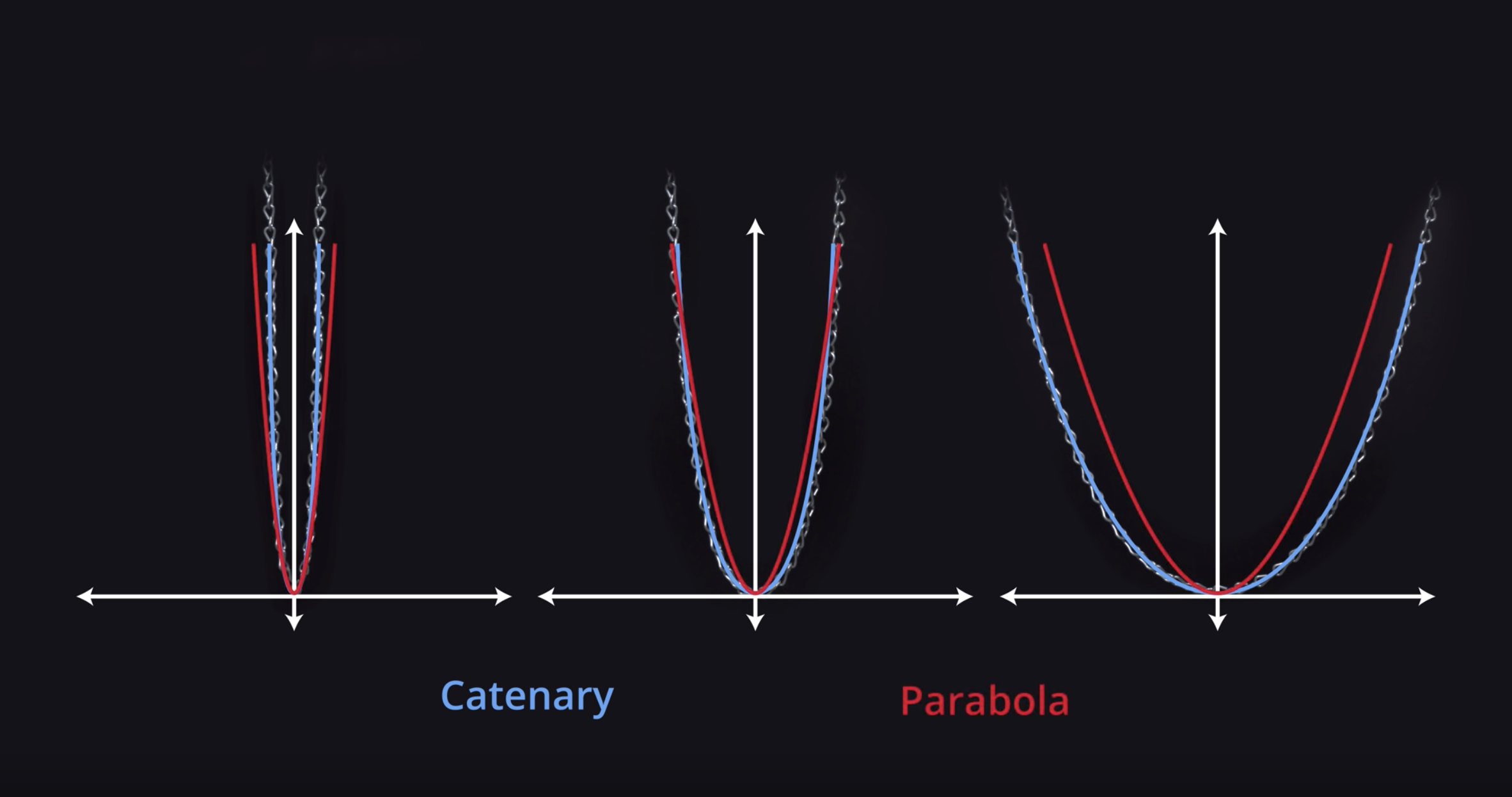
While not all arches are built from bricks, all arches do exhibit tension between points of contact of their construction material, forming a compression system of connectors pushing against each other. This works to a builder’s advantage, as the friction between materials coupled with this tension allows the materials to stay in place.
While arches do end up being durable and long-lasting structures, when they are not shaped appropriately for the loads they are meant to carry, they can collapse. Given the similarities between arches and chains, the angles needed to carry loads in the chain (a tension system) can be mirrored in the angles needed for an arch to carry the same loads.
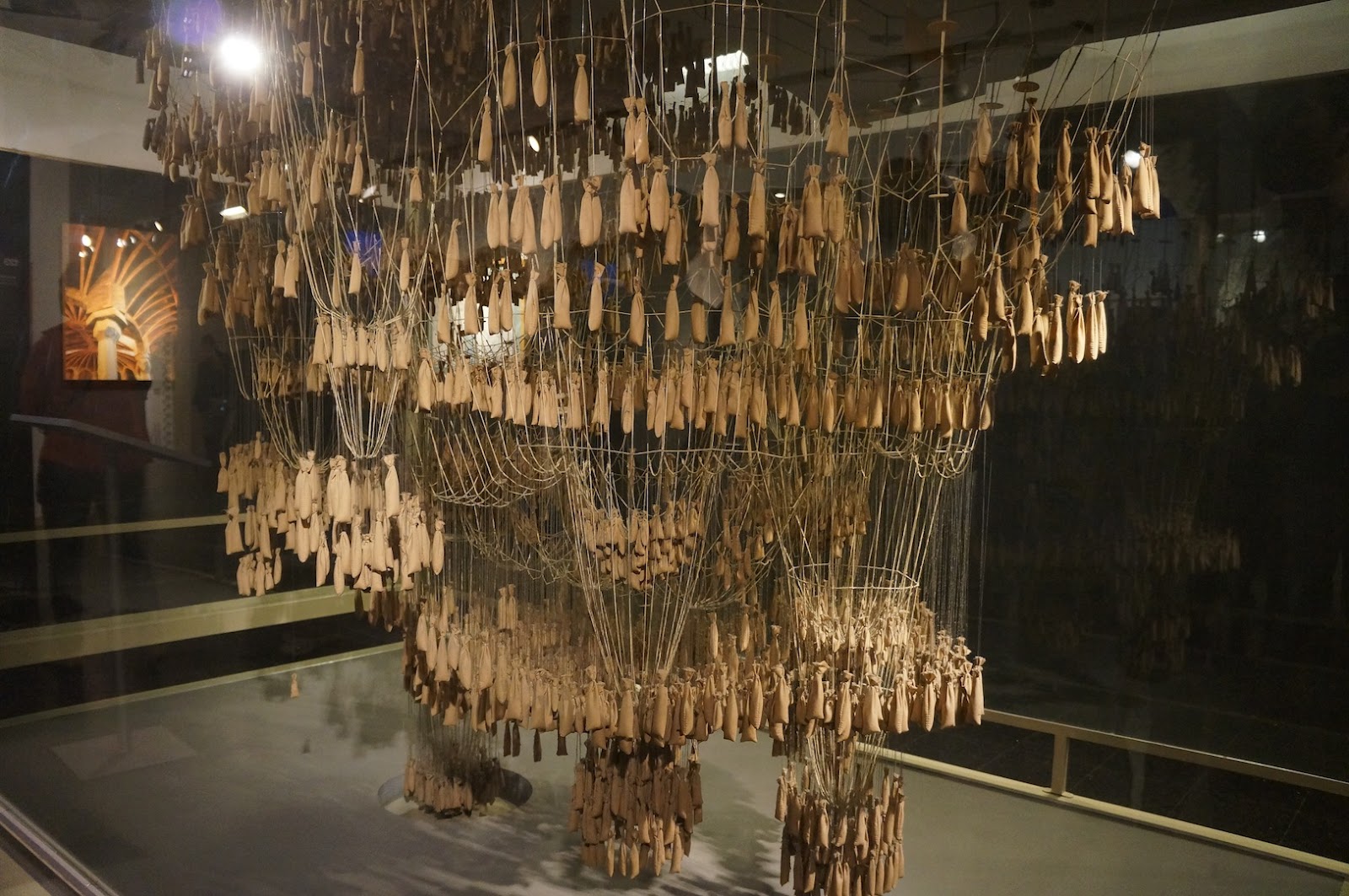
The Basilica of the Sagrada Familia in Barcelona uses the same techniques for its magnificent arches. Architect Antoni Gaudí initially built an upside-down model of the basilica, adding weights proportional to the roofs and other features he intended on adding to the structure. The resulting profile was the exact shape necessary for his arches to support the weight of the rest of the basilica.
For bridges, since there are not heavy static forces, so long as the arch has sufficient weight of its own, it does not need to take into account the position of its loads. This is due to the fact that similar to adding weights to a heavy or light chain, the heavier the arch, the less it transforms from the application of loads.
Modifying Arches
One interesting quandary for most people is figuring out which arches are able to support their own weight. University of Waterloo professor Wayne Brodland explains in his course on engineering models that as long as an arch is a mirror image of a chain of the same length hung from the same end points, then its shape is valid and can stand under its own weight.
This accounts for heavier semicircular arches, lighter arches with wider endpoints, and taller arches with closer endpoints and is known as the chain test. The test requires that a chain be able to fit within the arch when it is mirrored upside down. This also explains why thicker arches are able to adopt shapes that thinner arches cannot.
Another option is to adapt the shape of the chain to the shape of the arch. Since this requires outward forcing pulling on the chain, reversing these forces to push inwards on the arch allows it to hold up its shape.
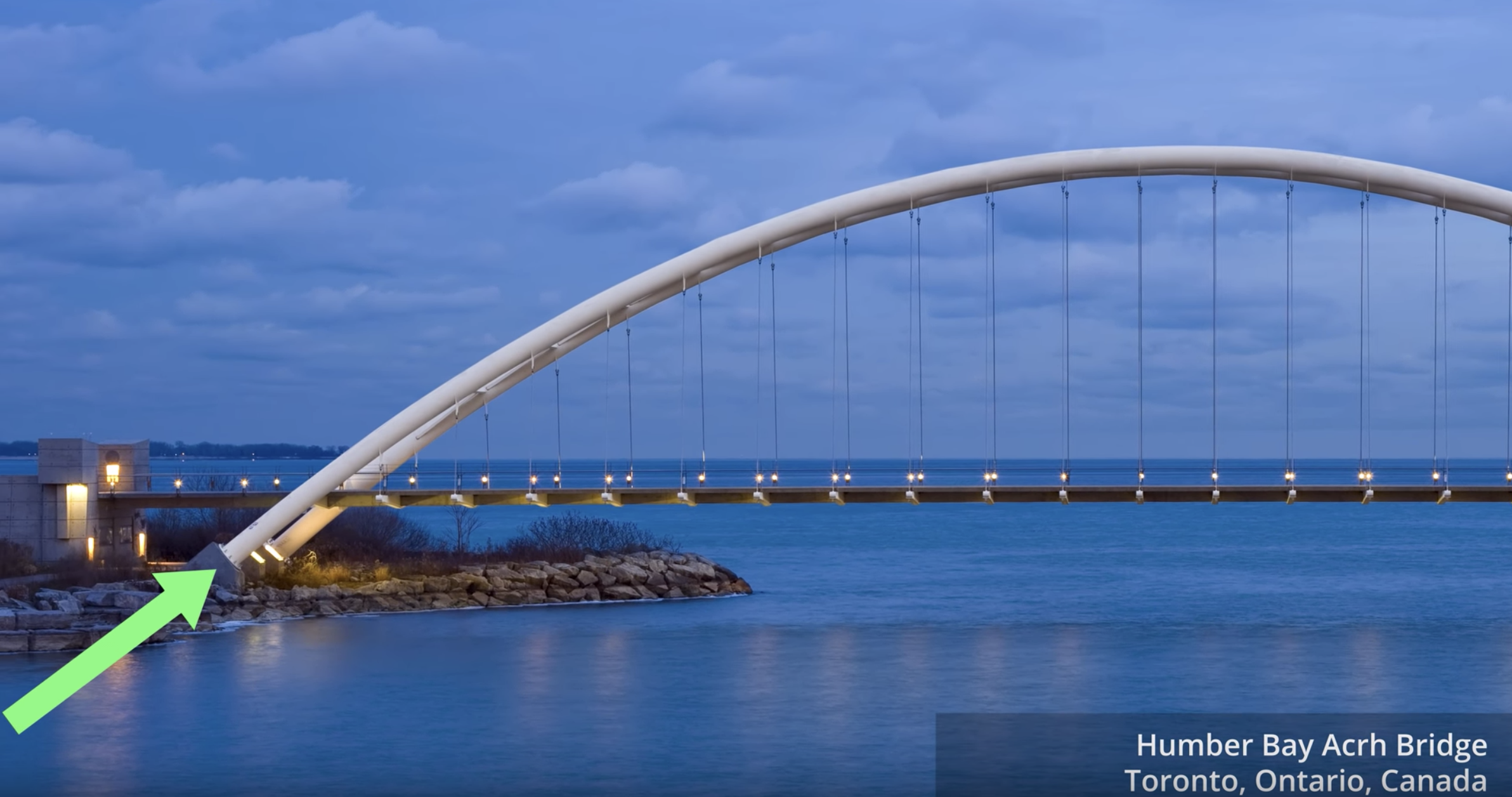
The forces applied to the ends of an arch are vector forces: pushing not just down, but also out. These two forces are balanced out by the normal force perpendicular to the surface and the frictional force parallel to the surface. If the forces produced by the arch are greater than the forces balancing the arch, particularly if the horizontal force is greater than the friction force needed to keep the endpoints in place, then the arch can collapse. For this reason, increasing surface friction can help an arch stay in place. In construction projects, end supports for arches are often angled to better transfer the forces to the arch’s endpoints.
Arch Supports
Rather than simply modifying the end points, however, the horizontal forces can also be provided by the stuff that surrounds the arch. Often, this takes the form of bricks and concrete around bridge.
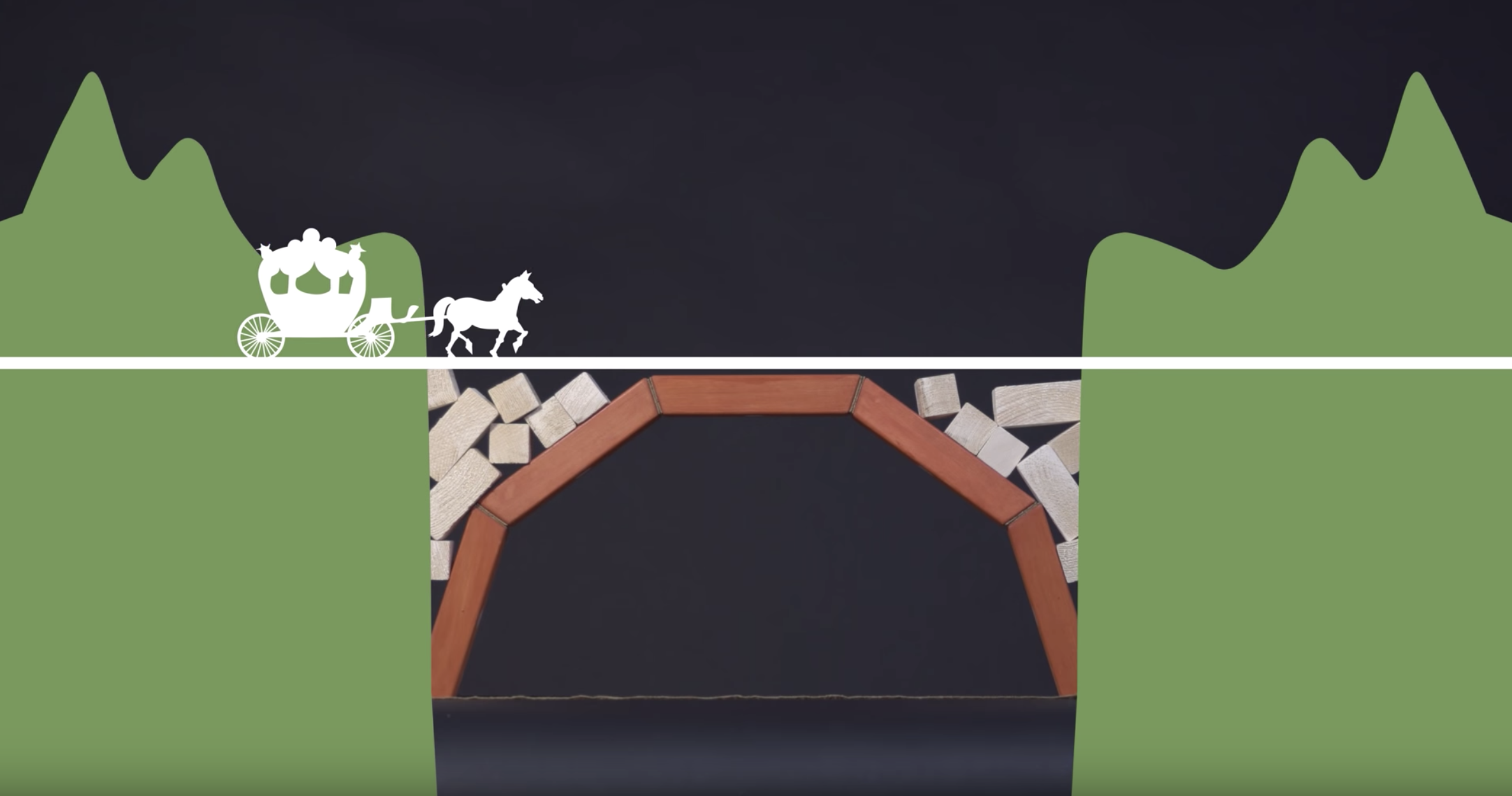
For multiple arches in a row, the horizontal forces at their ends can be made to balance, with each arch providing the necessary balancing forces for adjacent arches. The allows them to be supported by thinner columns.
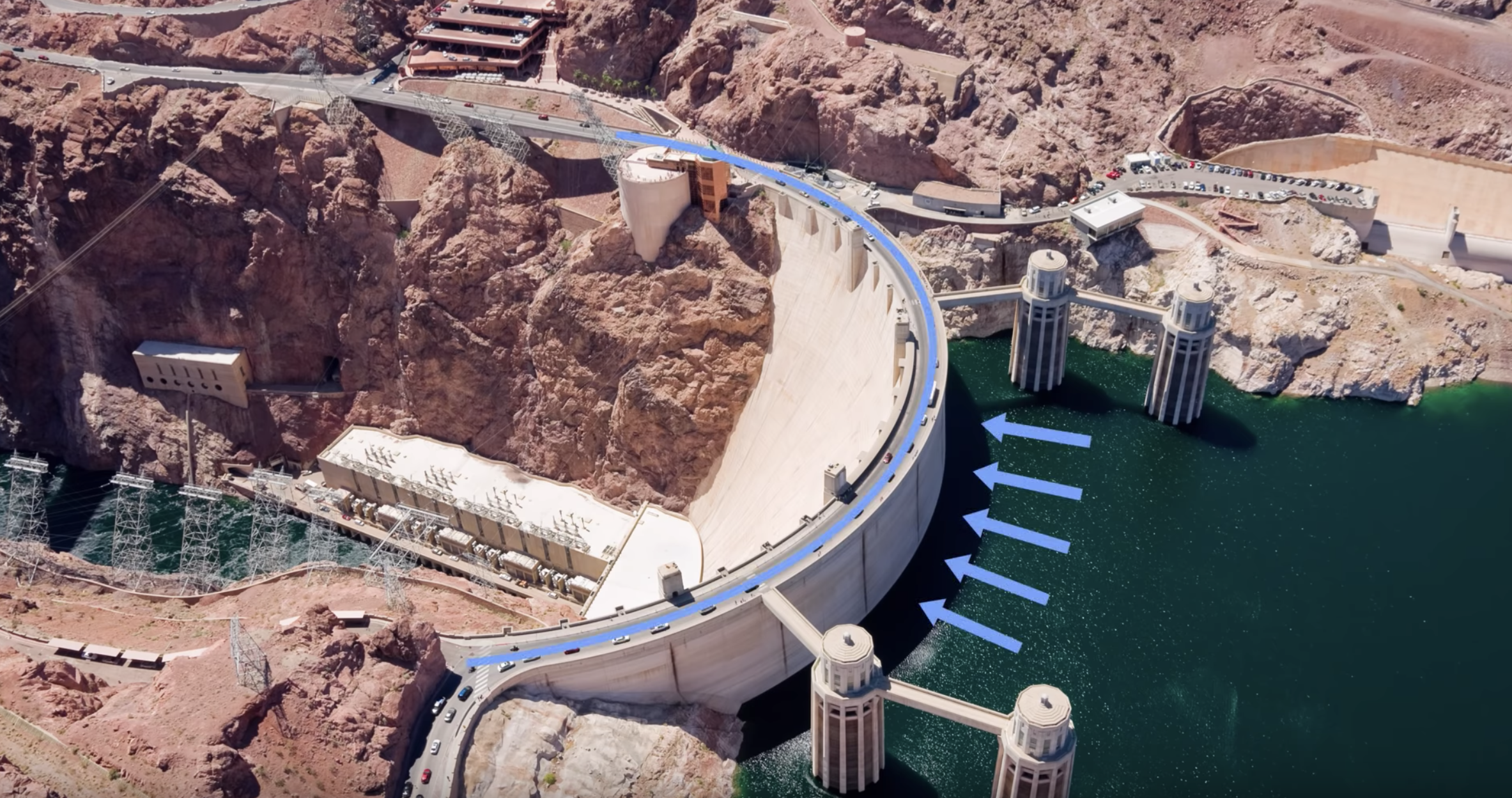
In the case of the Hoover Dam, the shape of the structure holding back the water in the dam is shaped as an arch on its side, with the load against the top of the arch. In this example, it’s clear that the shape of the arch can be mirrored in the shape of a chain.
Not all arches are structural, however, and often times bridges will use arches simply as decorative features. Nonetheless, it’s clear that there’s a more to know about arches than we knew initially – maybe you’ll incorporate some of these concepts into your next build project!
[Thanks to Chris Lam for the tip!]