If I were to ask you what is the oldest man-made orbiting satellite still in use, I’d expect to hear a variety of answers. Space geeks might mention the passive radar calibration spheres, or possibly one of the early weather satellites. But what about the oldest communication satellite still in use?
The answer is a complicated one. Oscar 7 is an amateur radio satellite launched on November 5th 1974, carrying two transponders and four beacons, all of which operate on bands available to amateur radio operators. Nearly 45 years later it still provides radio amateurs with contacts just as it did in the 1970s. But this bird’s history is anything but ordinary. It’s the satellite that came back from the dead after being thought lost forever. And just as it was fading from view it played an unexpected role in the resistance to the communist government in Poland.
Built to Last Just 3 Years
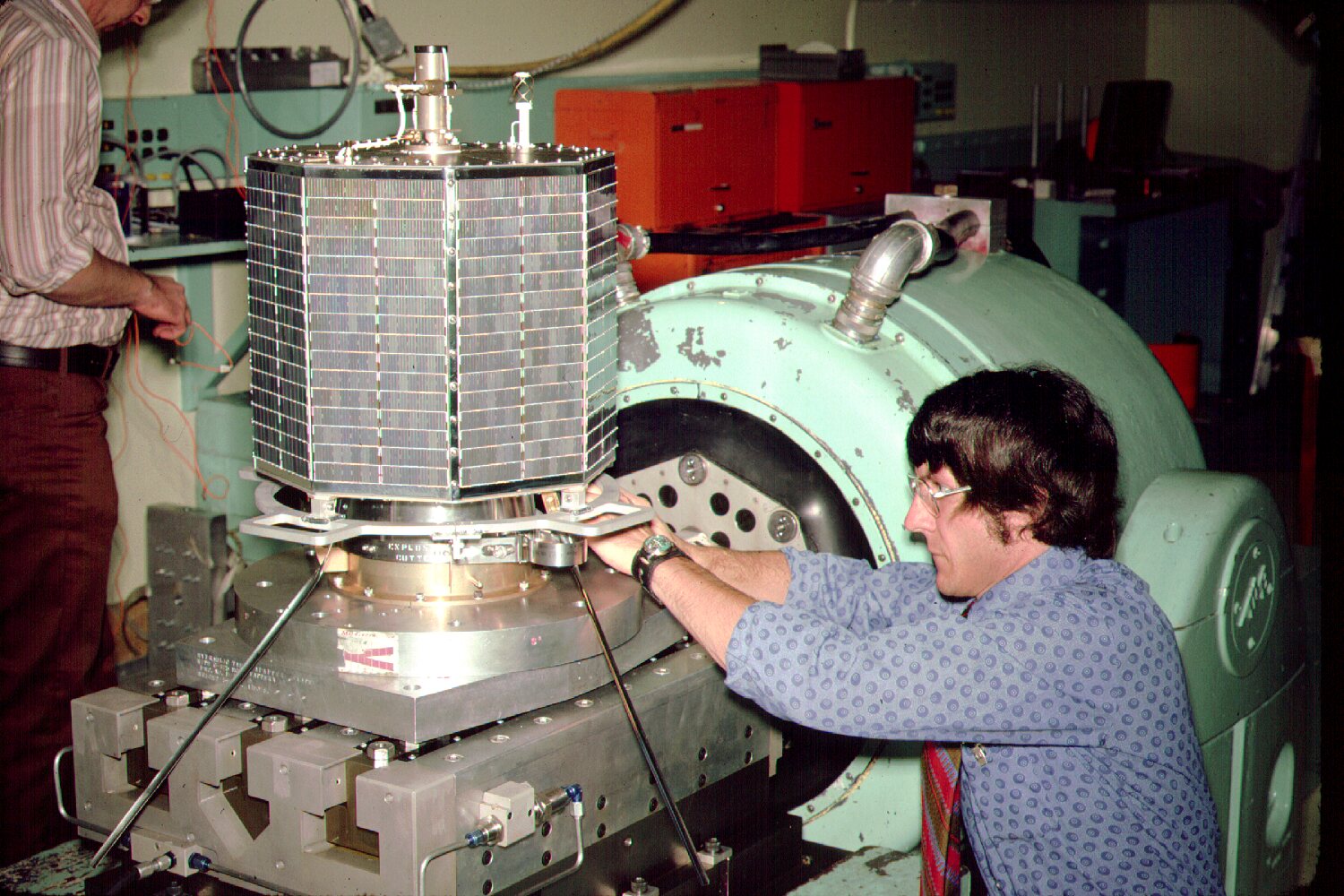
Upon its launch, OSCAR 7 had a designated lifespan of three years. That’s not unusual, these estimates tend towards the conservative and happily it continued operating beyond that timespan.
During its original life it achieved several firsts for an amateur radio satellite, including the first amateur inter-satellite relay between it and OSCAR 6. Eventually in June 1981 it suffered an intermittent failure and was abandoned by the amateur radio community, its beacons and two transponders considered silent forever just as those of previous OSCAR craft had been.
All was not however lost, because in July 2002 it was heard once more by [G4CUO] in the United Kingdom. It had achieved the impossible and returned from the dead, and before too long the amateur radio community was using it again for contacts.
A Very, Very Dead Battery
The resurrected OSCAR 7 could only operate when bathed in sunlight. The design included batteries to cover a full orbit, which almost 30 years after launch were obviously no longer operational. It is thought that the battery pack caused the original failure of the satellite, when it developed a short which drained the craft’s power supply. After two decades as little more than space junk, the battery degraded further degrade to the point at which they became open circuit. With the fault effectively removed from the system, the transponders could receive power directly from the solar panels as long as the sun could reach them
OSCAR 7 had sprung back to life, and I remember the surprise in the community at the time. By then there was no shortage of other satellites, but the return of a long-dead satellite was definitely something of a special event.
![The Polish Communist leaderWojciech Jaruzelski announcing the introduction of martial law. Warsaw, on the 13th of December1981 [Public Domain]](https://playingwithsteam.com/wp-content/uploads/2019/08/975px-AGAD_Gen._Wojciech_jaruzelski_13_grudnia_1981.png)
So the amateur radio community built a satellite, lost it, and through something of a miracle regained it. It’s a feelgood story, but it’s not the whole story of OSCAR 7.
When those batteries failed back in 1981 the satellite didn’t go out like a light, but continued to operate intermittently. While radio amateurs moved onto newer craft, people deprived of unrestricted communication options jumped at the opportunity to use an unattended satellite — even one that was faulty. The Solidarity movement in Poland was restricted by a Government clampdown on communications and used the satellite to relay messages internationally and between Polish cities (Polish language, Google Translate link.) to aid in co-ordinating their activities.
The highly directional nature of the antennas required to access an amateur radio satellite made them extremely difficult for the authorities to detect. OSCAR 7 presented the unthinkable, a relatively secure satellite communication system at no cost.
So if you ever ask yourself why amateur radio is relevant or how it still pushed the boundaries, think of OSCAR 7. One of the oldest spacecraft still in use, and one which played its own part in world history. Best of all, you can use it yourself, for the effort of getting an amateur radio licence.