Forty years ago this month, a product was launched in Japan that would have such a huge impact on the consumer electronics market that we are still using its descendants today. The story goes that one of the Sony founders would listen to music while traveling for the business, and found the company’s existing products cumbersome and awkward so asked his engineers to design something more convenient.
The resulting prototype became the Sony MDL-3L2, a set of miniaturised hi-fi headphones with distinctive foam earpads and a sliding metal headbands that in total weighed an astoundingly svelte 45 g. It was paired with a cassette player called a “Walkman” derived from the company’s existing recorder that had been intended for journalists, and went on to sell in the millions. The market for headphones would never be the same again, and if you have a set of lightweight cans in your possession then this was their revolutionary progenitor.
But Hang On, What’s So Special About Headphones?
You probably won’t have heard the Walkman’s 40th anniversary described in those terms in the various reports covering the event, because of course the social impact of the portable music player rather than its headphones is what people remember. The joy of making a mix tape, of listening to The Human League on the bus, and of the adult disapproval of anything involving Kids Having Fun. Previously, music had been a static affair involving bulky record players, but now it could be taken anywhere. The other youth audio icon of that era, the boombox, simply couldn’t match the Walkman, and everybody wanted one.
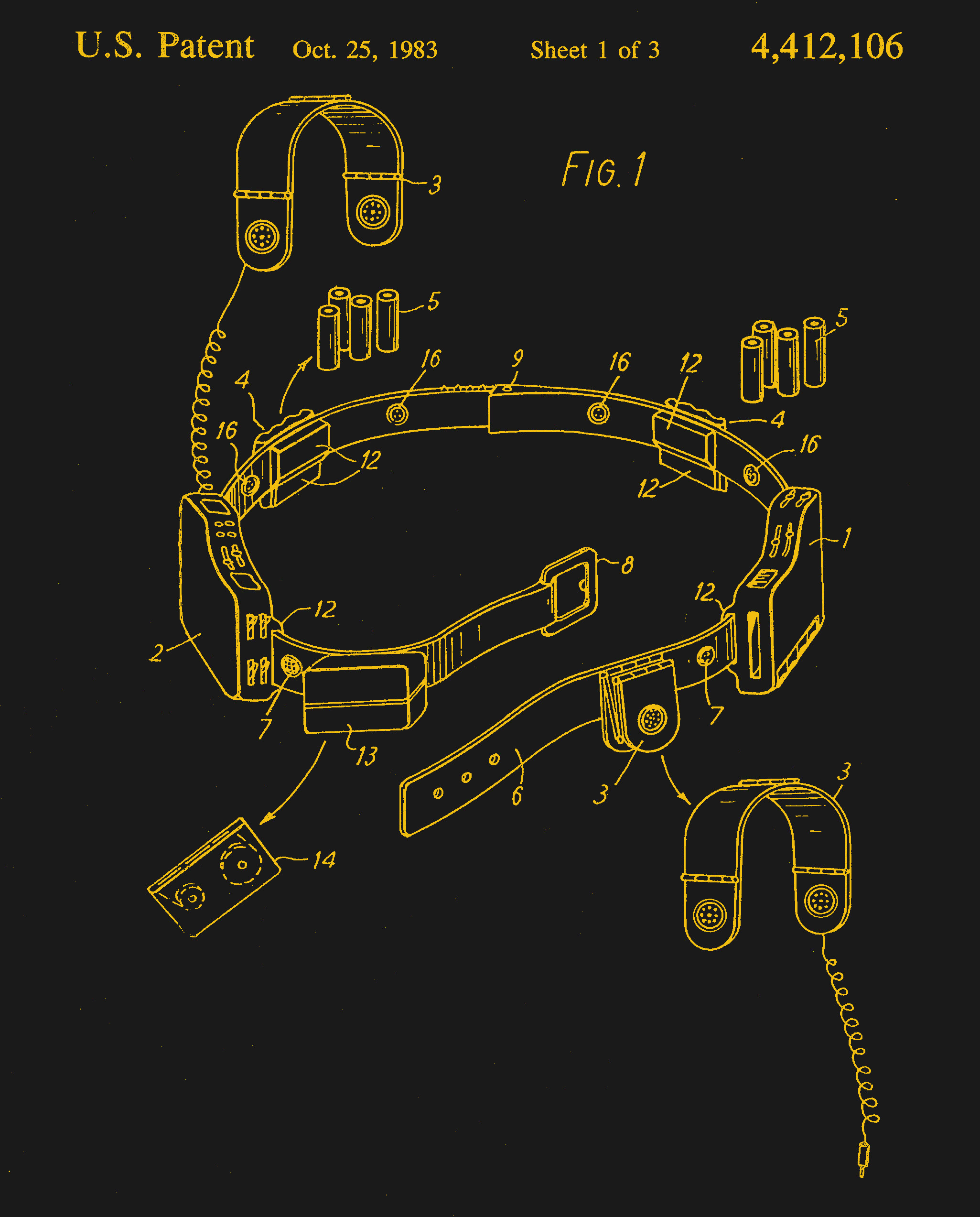
But from a tech perspective the Walkman itself isn’t the breakthrough that made personal audio possible, and instead the lightweight headphones are the main event. Diminutive cassette players were not revolutionary even in 1979, the Compact Cassette format that we’re all used to had been around since the Dutch electronics giant Philips rolled them out in the early 1960s as dictation machines, followed by both the Microcassette and Mini-Cassette formats which had been introduced at the end of that decade. A German inventor had already produced and patented a miniaturised cassette player he called the “Stereobelt” earlier in the decade, and it was inevitable that before long one of the larger manufacturers would have produced a Walkman-sized consumer device.
On the other hand, lightweight high-quality headphones such as those shipped with the first Walkman were a genuine innovation in 1979, and are really the component of the personal audio success story that should be celebrated. The true star of the show is the MDL-3L2, so perhaps it’s time to celebrate what it represents instead of its boxy stablemate.
We are used to our electronic devices being minimalist and pocket-sized in 2019, so to really understand the impact of a lightweight set of headphones it’s worth taking a trip back to the 1970s for a very different experience of consumer tech. Hi-Fi had traditionally been a prestige item, and no living room was comlpete without the wood and brushed aluminium of a so-called “Music centre” hi-fi stack. Music for younger people meant a standalone record player in the bedroom, a lug-around cassette player, or an AM portable radio, with the ever-present threat of parental rage should its volume become too high. Headphones — at least the ones you could afford — were chunky plastic affairs that were about as cool as your grandmother’s taste in interior decoration, and certainly not something you’d wear anywhere someone might see you. Anything lightweight certainly didn’t sound good, and anything that sounded good was way out of any reasonable budget. After the Walkman launch, the new light-weight ones became cool, a must-have fashion item that was often just worn around the neck when not being listened to, a fashion statement in itself. It didn’t matter that few teens had the Sony originals, here was something that gave them autonomy over their musical consumption, and they took hold of it enthusiastically.
Enough Cultural Impact, How About The ‘Phones Themselves?
![A typical modern headphone transducer, with a rare-earth magnet, and coil suspended on a polyester diaphragm. Iain Fergusson [CC BY 2.5]](https://playingwithsteam.com/wp-content/uploads/2019/07/Headphone-transducer.jpg)
It’s surprising, while researching this piece it has proved very difficult to find any information at all on the MDL-3L2, while it appears in many of the pictures of the first Walkman it’s always mentioned only in passing as the product of another design team at Sony. The early models feature a blue and silver design to match that first Walkman, and in the place of the one piece springy metal headband you’d find on later models and their copies it has a shorter springy slider for each ear, that locates in a plastic headband. Unlike later similar ‘phones they had an uncommonly long cable, 3 metres seems excessive.
Because personal stereo headphones are regarded as cheap, almost disposable items, nobody seems to have performed a teardown on a pair and put it online. But since the lightweight construction is common to almost all low-priced headphones from decades since we can get an insight into what made them special in 1979 from looking at a more recent headphone driver. They’re so-called dynamic headphones, in which a coil of wire fed by the amplifier is fixed directly to a diaphragm and floats in a magnetic field. Almost all headphones that don’t cost a fortune are dynamic designs, they have proved themselves over the decades to be cheap to manufacture, reliable, and high-performance. Sony used a rare-earth magnet in place of the much heavier ferrite magnets that would have graced earlier designs, and paired it with a polyester diaphragm over an open-backed rigid plastic frame. The front was covered with those distinctive foam pads, while the open back led to music leaking into the surroundings. These features have been the norm on headphones for years, but in the 1970s these were still exotic materials for a consumer-level product.
In the years following the launch of that first Walkman the market for personal stereo equipment exploded, with every player in the electronics market getting in on the act. The original Sony headphones were copied and made cheaper, becoming a generic item by the mid 1980s that you can still buy for about two dollars complete with those orange foam pads. They developed into in-ear designs and then dispensed with the headband entirely before further evolving into earbuds. But all these personal audio products owe their heritage to the single progenitor. Not the first Walkman, but its headphones, the Sony MDL-3L2. Happy 40th birthday!
Header image: Yoshikazu TAKADA from Tokyo, Japan [CC BY 2.0]