If you move as a hardware hacker through the sometimes surprisingly similar world of artists, craftspeople, designers, blacksmiths, and even architects, there’s one piece of work that you will see time and time again as an object that exerts a curious fascination. It seems that designing and building a chair is a rite of passage, and not just a simple chair, but in many cases an interesting chair.
![An American-made Windsor chair from the turn of the 19th century. Los Angeles County Museum of Art [Public domain]](https://playingwithsteam.com/wp-content/uploads/2019/06/Windsor_Arm_Chair_LACMA_54.80.jpg)
Some of the most iconic seating designs that you will be instantly familiar with through countless mass-produced imitations began their lives as one-off design exercises. Yet we rarely see them in our community of hackers and makers, a search turns up only a couple of examples. This is surprising, not least because there is more than meets the eye to this particular piece of furniture. Your simple seat can be a surprisingly complex challenge.
Moving Charis From Artisan to Mass Market
The new materials and mass production techniques of the 19th and 20th centuries have brought high-end design into the hands of the masses, but while wealthy homes in earlier centuries had high-quality bespoke furniture in the style of the day, the traditional furniture of the masses was hand-made in the same way for centuries often to a particular style dependent on the region in which it was produced.
I’m at a hackerspace in the English county of Buckinghamshire, so for example the traditional local chair design here is the classic English Windsor chair pictured above. Its legs were hand-turned on a temporary pole lathe in the beech woodlands of the Chiltern Hills by a traditional craftsman known as a bodger. Its seat and chair back parts were made and assembled by other specialist craftsmen in an industry localised around the town of High Wycombe. Windsor chairs gained some features such as a steam-bent rear frame over the several centuries in which they were made in this manner, but they did not otherwise significantly change in design. They evolved to meet a need using the available materials of the region and stayed that way until the artisan industry died out in the face of mass production. In the case of Windsor chairs, the traditional trades have been revived in the last few decades, but if you buy a Windsor chair today the chances are it was made on modern machinery in a factory.
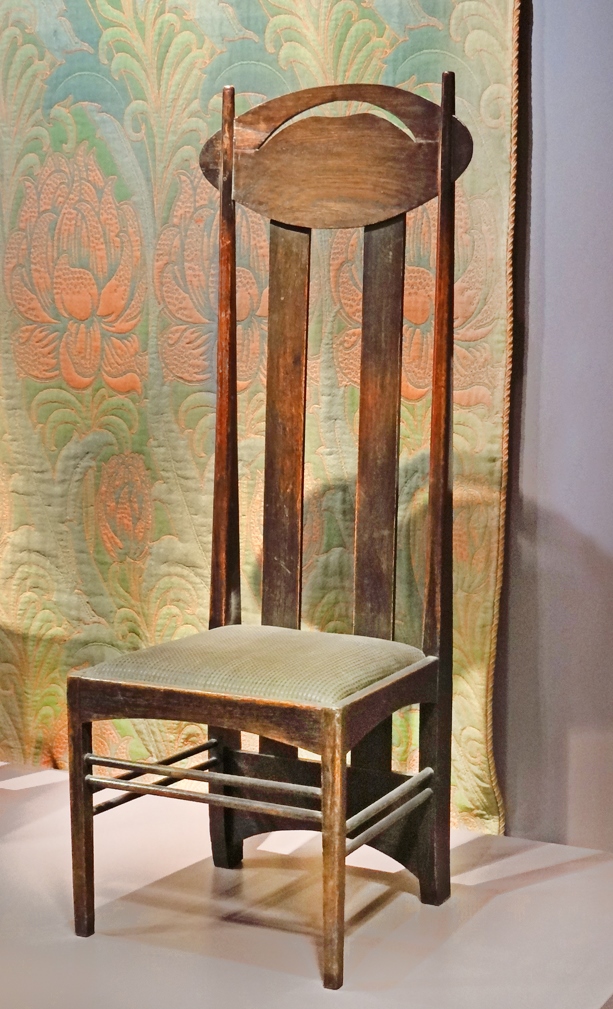
As furniture moved from being a bespoke product produced by local craftspeople into one of fashion and manufacture driven by an emerging consumer class, its design shifted from those craftspeople to a new breed of artists. Industrial design as we know it today might not have been formalised into a profession, but artistic movements such as the 19th century Gothic Revival and later Arts and Crafts and Art Nouveau movements included furniture designers whose work had a heavy influence on the mass-produced pieces that would have graced the homes of the masses. My grandparents had more practical dining chairs with a visible mass-market influence from pieces of furniture in a similar style as the Charles Rennie Macintosh chair pictured here.
Modern Materials and Techniques Have Changed How We Sit
![Arne Jacobsen's 3107 chair, from 1955. Corvus [CC BY-SA 4.0]](https://playingwithsteam.com/wp-content/uploads/2019/06/No7Arne-Jacobsen.jpg)
The design of domestic furniture might have traveled a long way from the artisan work of the chair bodgers in the Chilterns to the voluptuous curves of Art Noveau fantasy, but in materials it remained stubbornly wooden. The easy availability of new materials and manufacturing techniques in the 20th century gave designers a limitless palette to work with, and the Art Deco designers of the prewar period and the postwar Modernists ran with them and created the shapes, colours, and textures that are still with us today.
It is impossible to spend much time in the 21st century without seeing the influence of Arne Jacobsen’s 3107 chair; the original was manufactured using formed plywood and its echoes can be found in many others in different media. Stores such as IKEA have immersed us in high-quality design in cheap materials to the extent that we take it for granted, but somehow the signature form of the domestic industrial designer hasn’t made it into our world of makers and hackers. As an engineer I find this puzzling, because a chair is simultaneously a thing of universal need and engineering challenge.
There may be some left-field Hackaday editors who prefer to use a standing-up desk, but the majority of us spend our time seated. Our chairs need to be stylish, practical, and supremely ergonomic, while also being without inherent design flaws that might cause them to collapse while someone is sitting in them. If that doesn’t throw the gauntlet down to the hacker as much as to the architect or the industrial designer, I don’t know what does!
Chairs: Your Engineering Challenge
![Robin Day's HilleStack chair from 1964. Robin & Lucienne Day Foundation [CC BY-SA 4.0]](https://playingwithsteam.com/wp-content/uploads/2019/06/Polypropylene_stacking_chairs_in_original_colours_charcoal_light_grey_and_flame_red_Robin_Day_Hille_1964.jpg)
So having proclaimed chair design to be a challenge, how might one approach it? For me, everything flows from the ergonomics, so of primary importance is understanding dimensions while seated. Thankfully there are modern tools for this.
You can use MakeHuman or similar modeling software can to create a virtual you. From there, detailed measurements of the seats you find most comfortable can be compared to your virtual MakeHuman character to establish guidelines for your most comfortable seating position. Choose your materials, and get started on the prototype.
I’m both a textilist and a metalworker so my ideal chair uses a forged and welded steel frame and an upholstered seat. Again, modern tools make this much easier than in the past as a 3D seat model can be flattened to produce a two-dimensional fabric patterns.
As the plan comes together you can even run finite element to design a steel framework without weak points such as the meeting of the two legs at the side of Robin Day’s HilleStack polypropylene and steel chair. The frame also must distribute weight evenly onto the floor such that it doesn’t damage the floorboards. I think I could do that, but I suspect the weight of a forged steel frame would make my particular dream chair less practical. And so you can see the challenges stack up: comfortable but beautiful, beautiful but strong, strong but not overly heavy.
Fine Examples of Hacker Chairs
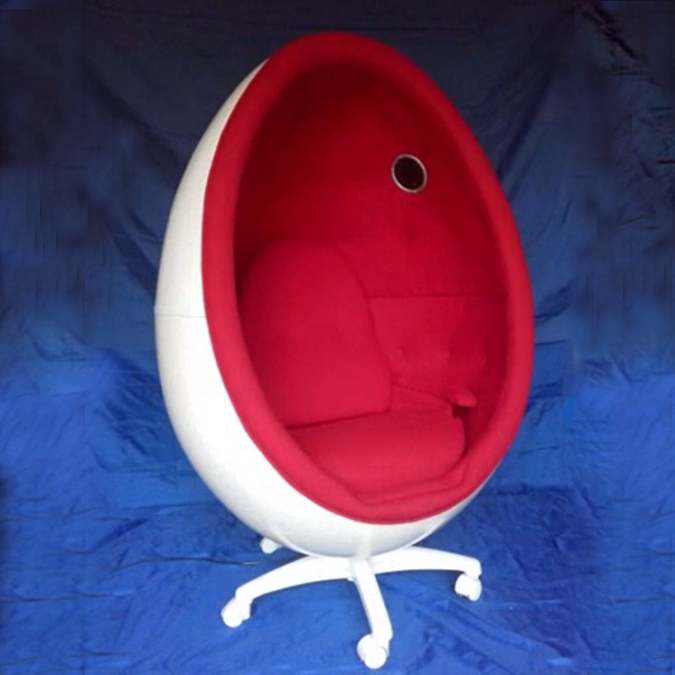
I said we had a couple of examples in Hackaday’s library, and it’s worth bringing them up as a bit of inspiration. The first is Talon Pascal’s very well-executed copy of Henrik Thor-Larsen’s iconic Ovalia egg chair from 1968. This demonstrates very well that to have a design chair of your own you do not even have to design it, if there is an iconic seat that does it for you it’s always possible for you to make a copy. In Talon’s case the copy uses different materials from the original, instead of fibreglass he’s used thin strips of wood. This is hacking at its finest, and from what we can see we’d be hard-pressed not to believe it was the real thing.
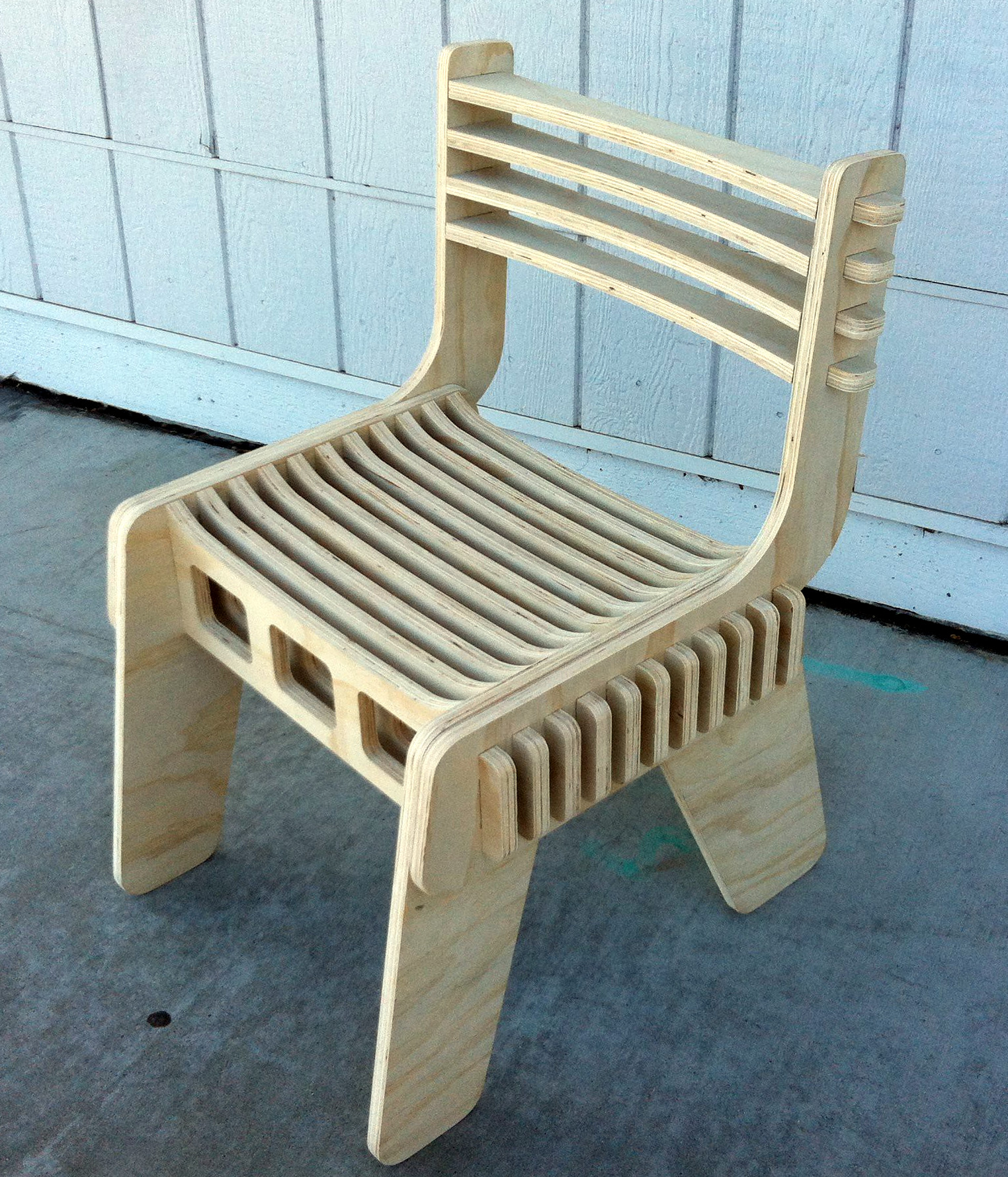
Another standout project in the Hackaday ecosystem is Eberlin’s interlocking plywood chair. This is much more in the vein of the one-off design chairs listed above, and ticks all the boxes of using innovative manufacture and construction techniques. Having never sat in one I have no idea whether or not it is comfortable, but this chair could be manufactured and sold tomorrow drawing from just one single material. If it had come from a noted designer it would be instantly famous and considered a design classic, let’s hope by pulling it up in this article it gains a little bit more attention.
Having spent a while looking at chairs and understanding that there is more to them than meets the eye, I hope some of you have been inspired to follow in the footsteps of those famous designers and have a go at creating your own. This topic may not be the usual Hackaday fare of microcontrollers and robots, but that makes it no less worthy of your consideration. I look forward to seeing (and sitting in) your creations.