This week marks the twenty-five year anniversary of the demise of Commodore International. This weekend, pour one out for our lost homies.
Commodore began life as a corporate entity in 1954 headed by Jack Tramiel. Tramiel, a Holocaust survivor, moved to New York after the war where he became a taxi driver. This job led him to create a typewriter repair shop in Bronx. Wanting a ‘military-style’ name for his business, and the names ‘Admiral’ and ‘General’ already taken, and ‘Lieutenant’ simply being a bad name, Tramiel chose the rank of Commodore.
Later, a deal was inked with a Czechoslovakian typewriter manufacture to assemble typewriters for the North American market, and Commodore Business Machines was born. Of course, no one cares about this pre-history of Commodore, for the same reason that very few people care about a company that makes filing cabinets. On the electronics side of the business, Commodore made digital calculators. In 1975, Commodore bought MOS, Inc., manufacturers of those calculator chips. This purchase of MOS brought Chuck Peddle to Commodore as the Head of Engineering. The calculators turned into computers, and the Commodore we know and love was born.
The Commodore We Remember
Commodore, as we know it today, began in 1977 with the release of the PET — the Personal Electronic Transactor which some consider the first publicly available personal computer. This was Peddle’s creation, and Tramiel believed Commodore would be a computer company from here on out. The release of the PET was followed by the release of the VIC-20, which was in turn followed by the release of the Commodore 64. After the release of the C64, Commodore was selling more computers than the rest of the industry combined. For all the respect that Apple gets now — legitimate respect in terms of market cap, market share, and the logistics of vertical integration — Commodore was there first. Commodore should have been the most influential tech company of all time. People are people, though, so here are my thoughts on that.
By the late 1980s, the sharks were circling, and Commodore’s Amiga, seen today as the most graphically capable computers of the day, was seen by consumers as a toy. The IBM-compatible PC took over the market, and on April 29th, 1994, Commodore ceased to exist. What’s dead may never die, and the Commodore trademarks were sold off (eventually) to Escom, who later went defunct, then sold off to Tulip Computers, who later went defunct.
The definitive documentation of the Last Day of Commodore would be Dave Haynie’s video of the factory floor shot on April 30th, 1994. This video was taken in the Commodore Amiga factory in West Chester, Pennsylvania, right near that airport. Over the years this building would become the studio for QVC, the home shopping network that isn’t the Home Shopping Network.
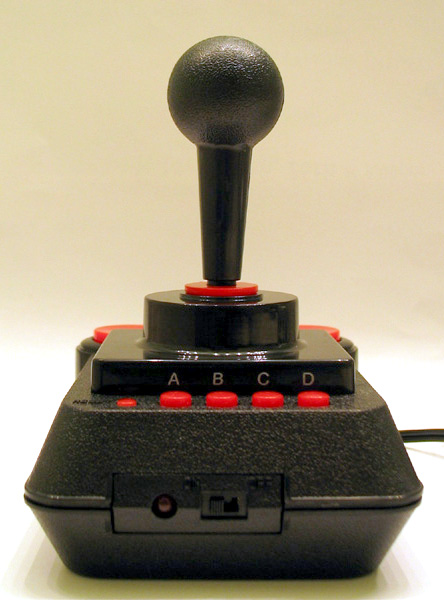
History is full of odd coincidences, and years later Commodore would see a modern rebirth of sorts in the same building. The C64 Direct-to-TV, the creation of Jeri Ellsworth would become one of the best-selling devices in the current trend of ‘retro emulation’ consoles like the NES Classic, the PS1 Mini, and other consumer devices glomming onto nostalgia of an eager buying public. The C64 Direct-to-TV owes its existence to QVC, who bought the entire first production run and broadcast it to the world from the building that once housed the Amiga assembly line. History is full of odd coincidences.
The chicken lips shed a tear this week, but what’s dead may never die.