The wheels of government move slowly, far slower than the pace at which modern technology is evolving. So it’s not uncommon for laws and regulations to significantly lag behind the technology they’re aimed at reigning in. This can lead to something of a “Wild West” situation, which could either be seen as a good or bad thing depending on what side of the fence you’re on.
In the United States, it’s fair to say that we’ve officially moved past the “Wild West” stage when it comes to drone regulations. Which is not to say that remotely controlled (RC) aircraft were unregulated previously, but that the rules which governed them simply couldn’t keep up with the rapid evolution of the technology we’ve seen over the last few years. The previous FAA regulations for remotely operated aircraft were written in an era where RC flights were lower and slower, and long before remote video technology moved the operator out of the line of sight of their craft.
To address the spike in not only the capability of RC aircraft but their popularity, the Federal Aviation Administration was finally given the authority to oversee what are officially known as Unmanned Aerial Systems (UAS) with the repeal of Section 336 in the FAA Reauthorization Act of 2018. Section 336, known as the “Special Rule for Model Aircraft” was previously put in place to ensure the FAA’s authority was limited to “real” aircraft, and that small hobby RC aircraft would not be subject to the same scrutiny as their full-size counterparts. With Section 336 gone, one could interpret the new FAA directives as holding manned and unmanned aircraft and their operators to the same standards; an unreasonable position that many in the hobby strongly rejected.
At the time, the FAA argued that the repealing Section 336 would allow them to create new UAS regulations from a position of strength. In other words, start with harsh limits and regulations, and begin to whittle them down until a balance is found that everyone is happy with. U.S. Secretary of Transportation Elaine L. Chao has revealed the first of these refined rules are being worked on, and while they aren’t yet official, it seems like the FAA is keeping to their word of trying to find a reasonable middle ground for hobby fliers.
Proposed Rule Changes
Under the current FAA rules, flying a UAS or drone over people or at night is prohibited unless you apply for a special Part 107 waiver. To the credit of the FAA, they have been granting waivers for drone pilots who make reasonable requests, as evidenced by the public list of granted waivers. But as one might expect when dealing with the federal government, it’s still a burdensome process. Not only can it take up to 90 days to review your application, but according to the FAA’s own numbers, most waiver applications are denied due to lack of necessary information.
The new proposed rules would allow for flights at night and over people without going through the waiver process, as long as other conditions are met. These rules wouldn’t replace the waivers, but would offer another path forward for those who are willing (or able) to meet the requirements. This nuanced approach means that waivers could still be granted for one-off events or experiments, but those who want to regularly fly at night or over people have a more permanent option available to them.
Choice is always a good thing, especially when it comes to hobbyists or experimenters. If the official path towards these restricted flights is too difficult or expensive for the individual, at least they’ll still have the ability to apply for a waiver on a case-by-case basis. So the only question is, what exactly would the requirements be under the proposed changes?
Night Flying
For night flying the operator must pass an approved night-flying knowledge test and the UAS itself must sport a visible anti-collision light. The information pertaining to this test, such as brochures and training videos, will be made available for free on the FAA website. As for the anti-collision light, the only requirement is that it be visible for three statute miles.
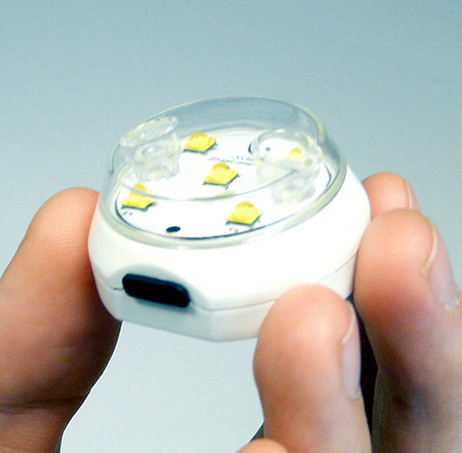
According to the draft version of the new rules, some thought had been given to more complex lighting requirements, such as strobes or multi-colored navigational lights, but eventually it was determined they were an unreasonable burden. It specifically states that the size and limited battery capacity of small drones makes it unreasonable to ask manufacturers to include complex lighting systems.
Interestingly, the three statute mile visible anti-collision light is the same requirement placed on ultralight aircraft (as well as larger, commercial drones), so there are already small commercially available LED modules which are FAA certified to meet this requirement. Retrofitting these onto remotely controlled aircraft should pose no great difficulty, and it’s hard to argue against the need for a clearly visible anti-collision light on an object flying around at night.
Flying over People
The proposed rules for flying over people are considerably more complex, as the FAA aims to categorize UAS by their likelihood to cause bodily harm in the event of a collision. This takes into account not only weight, but design elements such as exposed propellers. The FAA recommendations go as far as saying that manufacturers of larger drones would need to utilize features such as crumple zones so the kinetic energy of any potential impact will be reduced.
This classification system will put the burden on commercial manufacturers, and it seems likely that only the most expensive turn-key drones are likely to feature the required safety features to be eligible for regular flight over people. If you’re in an industry where you need this capability (film makers, sports coverage, news, etc), then these are considerations you need to make when purchasing your next aerial photography platform.
Luckily for hobbyists and other aerial hackers, these requirements don’t kick in unless the drone weighs more than 250 grams. Under these proposed rule changes, anything at or below that weight will be freely able to fly over people with no design recommendations or additional requirements. As weight reduction has been the name of the game in the world of hobby quadcopters for some time, many very capable designs come in far below the 250 gram threshold. Considering that as of this writing the flight of any drone over people is illegal without prior FAA approval, this is likely to be a very popular change.
Keeping the Hobby Fun
Over the last five years or so, we’ve seen a dizzying array of new rules and regulations for small unmanned aircraft. It’s getting to the point that those looking to get into the hobby might get intimidated and lose interest. Considering how quickly the media will jump on any negative “drone” story, it’s hard to blame them. Nobody wants to get arrested for flying a quadcopter in their backyard because they didn’t file the appropriate paperwork.
But with a little luck, and some input from the community, we may be seeing the light at the end of the tunnel. These proposed rule changes seem, at least on the surface, to be reasonable solutions to two very common scenarios the average remote operator might find themselves in. Hopefully future refinements to the FAA’s drone rules will continue to clearly differentiate between hobby and commercial operators, and streamline the process for recreational fliers.